
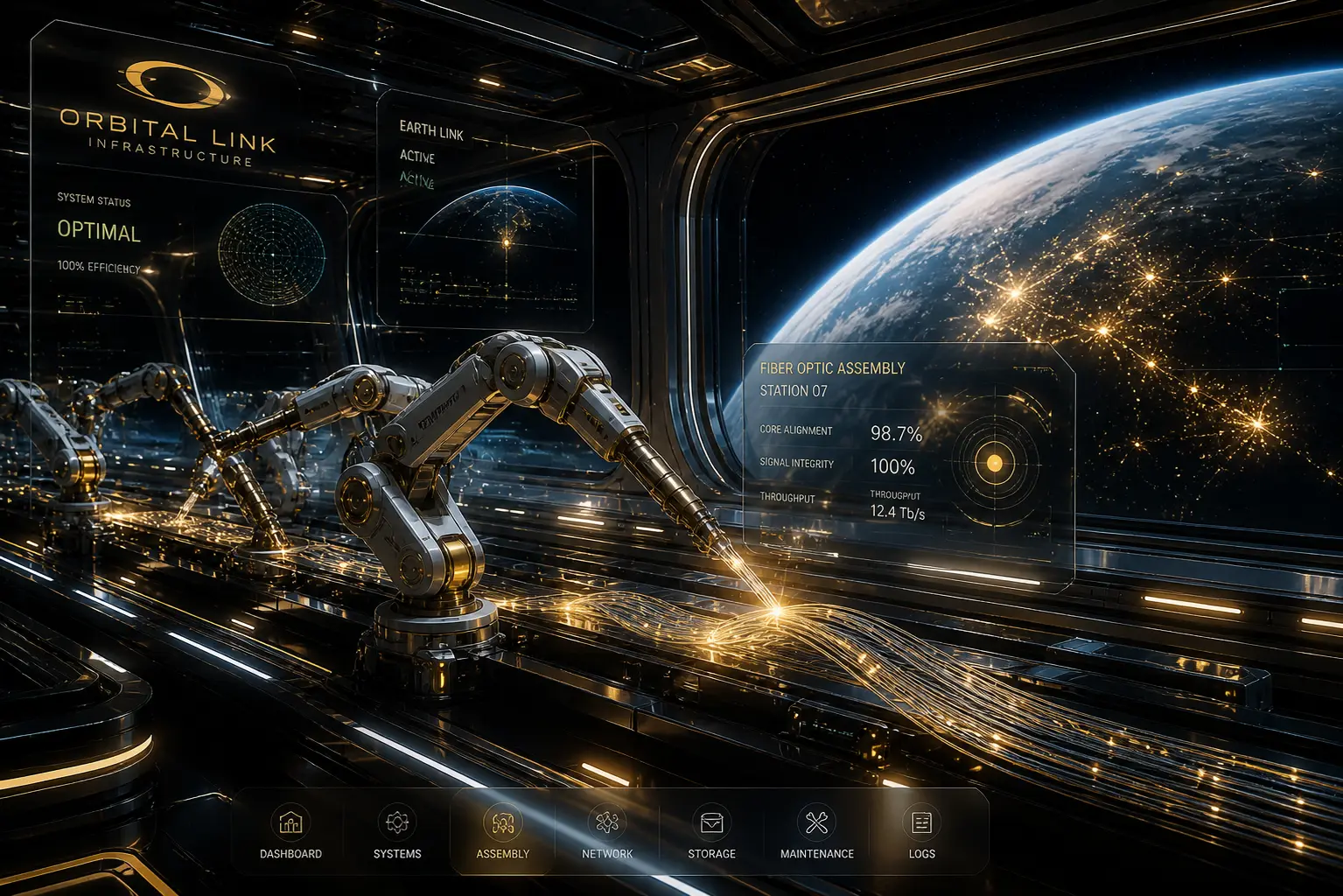
For decades, space was a playground for governments and astronauts. But as we navigate through 2026, the "Final Frontier" has officially become a boardroom priority. At Factorahub, we are seeing a massive shift where space is no longer just about 'going there' it’s about 'building there.'
The global space economy is projected to hit $1.8 trillion by the end of this decade. If you think this is just about rockets, you’re missing the bigger picture. We are talking about factories in orbit, cellular networks from the stars, and an energy race on the lunar surface.
1. Orbital Manufacturing: Zero-G is the New Silicon Valley
Why would anyone want to build things in space? The answer is Microgravity. On Earth, gravity causes convection and sedimentation, which can introduce flaws in high-tech materials.
In the vacuum of space, we can create:
Bureau Verification Tools
-
ZBLAN Optical Fibers: These can transmit data 100x more efficiently than Earth-made fiber optics.
-
Perfect Protein Crystals: For the Health-Tech & Biotech sector, growing crystals in Zero-G allows for drug discovery that is impossible on the ground.
-
Bio-printing Organs: Without gravity, 3D-printed human tissues don't collapse under their own weight.
2. The Moon as the Earth’s "Gas Station" (Helium-3 Race)
The moon is no longer just a poetic light in the sky; it’s a strategic asset. The primary target? Helium-3. This rare isotope is scarce on Earth but abundant on the lunar surface. It is the holy grail for clean fusion energy.
Countries are already drafting "Space Treaties" to define ownership. This ties directly into our Global Strategy analysis: whoever controls the lunar poles controls the future of energy.
3. The Starship Effect: Crashing the Cost of Entry
The biggest barrier to space was always the price per kilogram. With the full operational success of SpaceX's Starship in 2026, the cost to launch has dropped from thousands of dollars to just a few hundred.
This "democratization of space" means that medium-sized enterprises can now afford to put their own specialized sensors or small-scale manufacturing units into Low Earth Orbit (LEO).
Market Signals: Where the Money is Flowing
If you look at our Market Signals dashboard, venture capital is moving away from "Rocket Startups" and toward "Space Services." This includes:
-
Space Debris Cleanup: As orbits get crowded, cleaning up "space junk" is a billion-dollar necessity.
-
In-Orbit Refueling: Extending the life of billion-dollar satellites.
-
Space Logistics: The "FedEx" of the stars.
Expert Insight: "Space is the ultimate 'Blue Ocean' strategy. In 2026, every major Fortune 500 company will need a space strategy, or they will be left behind by the new orbital industrial complex."
Strategic Intelligence 10 SaaS Reasons for Enterprise Global Dominance
4. Strategic Challenges: The New Cold War?
With opportunity comes friction. We are seeing a "Satellite Arms Race." Nations are now capable of jamming or even disabling orbital assets. For a platform like Factorahub, tracking these geopolitical shifts is essential for understanding how global trade routes might be disrupted by celestial events.
FAQs: The Future of Space Business
Q1: Is space mining legal? Under the Artemis Accords of 2020 and subsequent updates in 2026, private companies can extract and own lunar resources, though they cannot "own" the Moon itself.
Q2: How can I invest in the space economy? Beyond SpaceX (private), companies like Northrop Grumman, Lockheed Martin, and various Space ETFs are the primary vehicles for public investors. You can use our Finance & Calculation Tools to analyze the ROI of these emerging sectors.
Q3: Will space-made products be available to common people? Yes. By late 2027, the first space-manufactured high-end semiconductors and life-saving drugs are expected to hit the premium markets.
Bureau Discourse
Participate in the Analysis
Your contribution is subject to editorial moderation.