
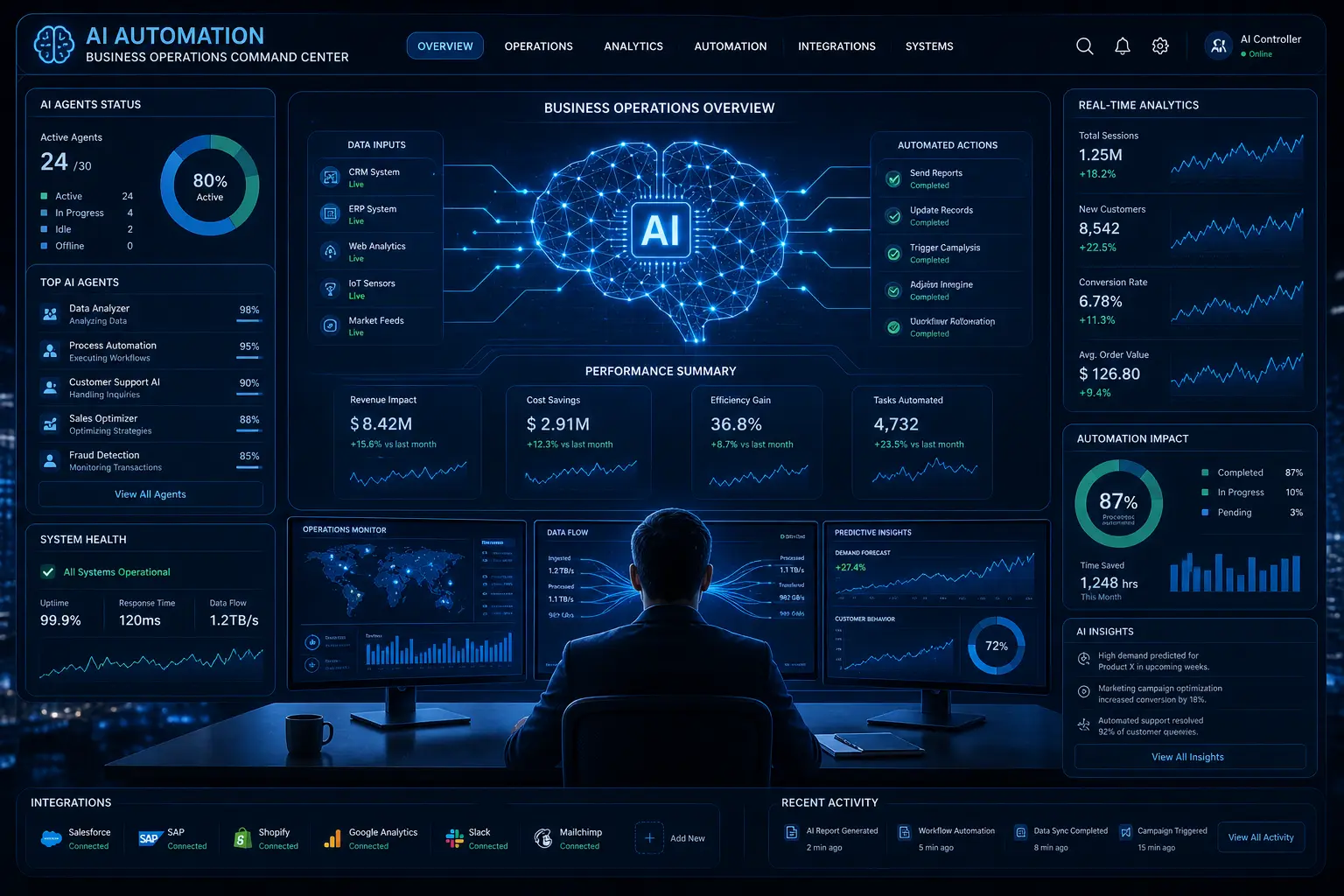
A few years ago, automation was considered an efficiency upgrade. In 2026, it has become a competitive necessity. Businesses are no longer asking whether they should adopt AI automation they are figuring out how fast they can implement it without disrupting operations.
AI automation is quietly transforming how companies operate behind the scenes. From decision-making systems to customer interaction layers, automation is reducing human dependency on repetitive tasks while increasing precision and speed.
The Shift from Manual to Intelligent Operations
Traditional automation followed fixed rules. Modern AI automation adapts, learns, and improves over time. This shift has allowed businesses to move from static workflows to dynamic systems that respond to real-time data.
For example, instead of manually analyzing reports, companies now rely on AI-driven dashboards that continuously process incoming data and highlight patterns instantly.
Bureau Verification Tools
This evolution is not about replacing human roles it is about redefining them.
Where AI Automation Is Creating the Most Impact
The influence of AI automation is visible across almost every department:
- Customer support powered by AI chat systems
- Finance operations using automated reconciliation
- Marketing campaigns driven by predictive analytics
- HR processes streamlined with intelligent screening systems
These applications reduce operational friction while improving output consistency.
Decision-Making Becomes Data-Driven
One of the most significant advantages of AI automation is its ability to support decision-making.
Instead of relying on intuition alone, businesses now combine human judgment with machine intelligence. AI systems analyze historical trends, current signals, and predictive models to suggest optimal actions.
This leads to faster, more informed decisions especially in high-pressure environments.
👉Suggested Tool: Keyword Research Tool
👉 Helps in identifying high-intent search trends for AI-driven marketing strategies.
Cost Efficiency Without Compromising Quality
Automation reduces the need for repetitive manual work, which directly impacts operational costs. However, the real value lies in consistency.
AI systems do not experience fatigue or variability. This ensures that processes such as data entry, customer queries, and reporting maintain a uniform standard.
For growing businesses, this consistency is often more valuable than cost reduction itself.
Challenges Businesses Must Address
Despite its advantages, AI automation introduces new challenges:
- Integration complexity with existing systems
- Data privacy and compliance concerns
- Initial setup costs
- Skill gaps within teams
Ignoring these challenges can lead to inefficient implementations that fail to deliver expected results.
Human + AI: The Hybrid Model
The most successful companies are not replacing humans they are augmenting them.
In this hybrid model:
- AI handles repetitive and data-heavy tasks
- Humans focus on strategy, creativity, and relationship building
This balance creates a more resilient and adaptable organization.
👉 Suggested Tool: Business Plan Generator
👉 Useful for mapping automation strategies across departments.
Automation and Customer Experience
AI automation is not just improving internal operations it is also transforming customer experience.
Businesses can now:
- Provide 24/7 support
- Deliver personalized recommendations
- Predict customer needs before they arise
This level of responsiveness builds stronger customer relationships and increases retention.
The Role of Data in Automation Success
Automation is only as effective as the data it relies on.
Organizations must ensure:
- Clean and structured data
- Secure data storage
- Real-time data availability
Poor data quality can lead to flawed automation decisions, which can harm business outcomes.
Future Outlook: AI as a Core Business Layer
Looking ahead, AI automation will no longer be a separate function it will become part of the core business infrastructure.
Companies that integrate automation deeply into their operations will gain a significant edge in speed, scalability, and adaptability.
Conclusion
AI automation is not just about efficiency it is about building smarter, more responsive businesses. Organizations that adopt a strategic approach to automation will not only reduce operational complexity but also unlock new growth opportunities.
Bureau Discourse
Participate in the Analysis
Your contribution is subject to editorial moderation.