
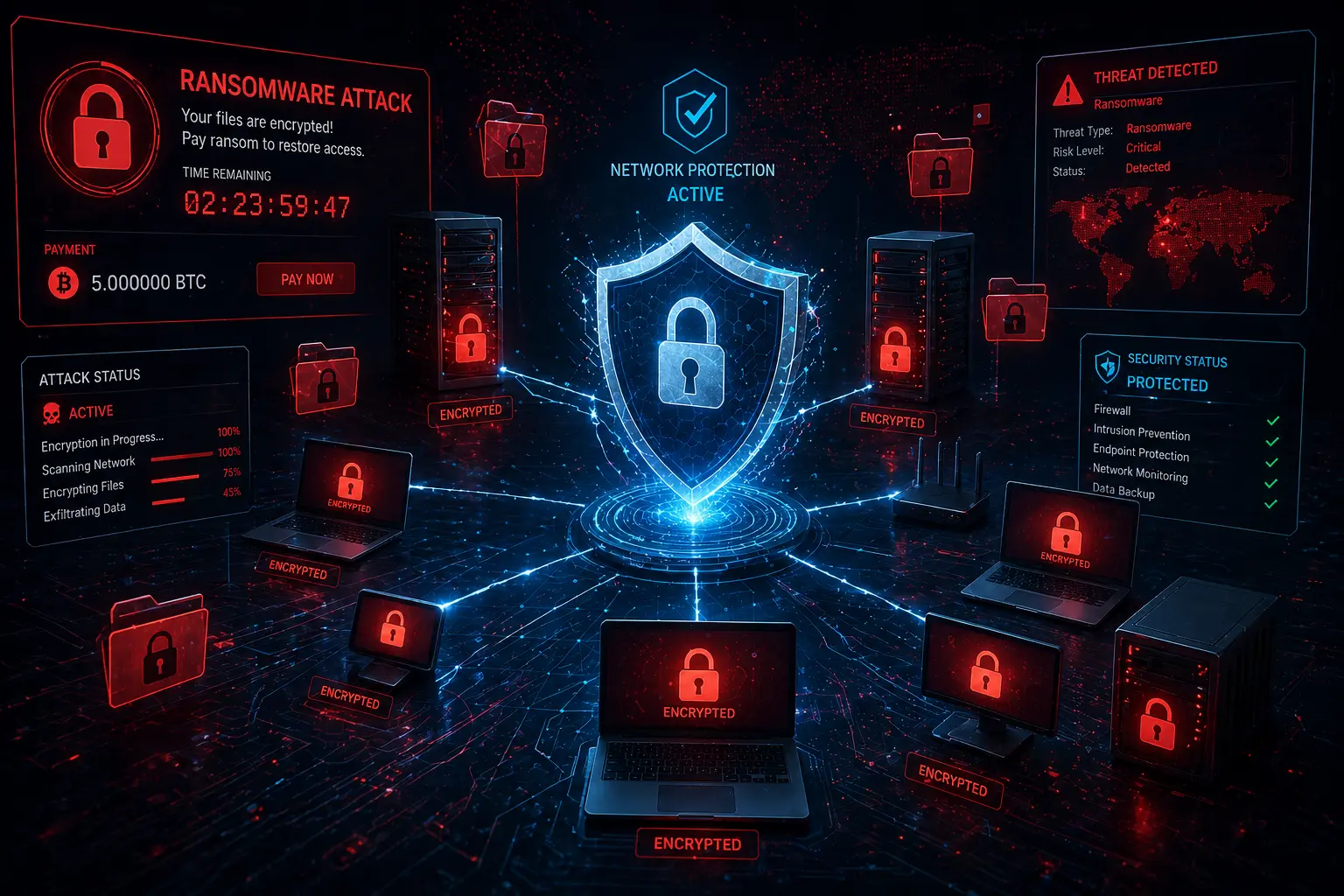
Ransomware is no longer a distant cybersecurity concern it has become one of the most disruptive threats facing businesses today. From small startups to large enterprises, no organization is immune. What makes ransomware particularly dangerous is not just the attack itself, but the speed at which it can bring operations to a halt.
For many businesses, the first sign of an attack comes too late when systems are locked, files are encrypted, and a demand for payment appears on the screen. At that point, the focus shifts from prevention to damage control, often at a significant financial and reputational cost.
Understanding how ransomware works and more importantly, how to defend against it is now a fundamental requirement for modern business operations.
🔍 Understanding How Ransomware Attacks Work
At its core, ransomware is a type of malicious software designed to block access to systems or data until a ransom is paid. These attacks typically begin with a simple entry point an email attachment, a compromised website, or an unpatched vulnerability.
Once inside a system, the malware spreads silently. It scans for valuable files, encrypts them, and often attempts to disable backups. In more advanced attacks, sensitive data is also exfiltrated, giving attackers additional leverage.
What makes ransomware effective is its ability to exploit human behavior as much as technical weaknesses. A single click on a malicious link can be enough to initiate a full-scale breach.
⚠️ Why Businesses Are Prime Targets
Cybercriminals increasingly target businesses because they are more likely to pay. Downtime costs money, and in many cases, organizations feel pressured to restore operations quickly.
Small and medium-sized businesses are especially vulnerable. They often lack dedicated security teams, rely on outdated systems, or underestimate the risk. This combination creates an ideal environment for attackers.
At the same time, larger enterprises face more complex infrastructures, which can introduce multiple points of failure if not properly secured.
🛡️ Building a Strong First Line of Defense
Preventing ransomware starts with strengthening the basics. While no system can be made completely immune, a layered defense strategy significantly reduces risk.
Regular software updates are one of the simplest yet most effective measures. Many attacks exploit known vulnerabilities that already have available patches. Keeping systems up to date closes these gaps.
Equally important is endpoint protection. Modern security tools go beyond traditional antivirus software by detecting unusual behavior, isolating threats, and preventing unauthorized access.
🔐 Strengthen your security setup by analyzing encryption and certificate health using our SSL Checker.
👥 The Human Factor: Training and Awareness
Technology alone cannot prevent ransomware. Employees play a critical role in maintaining security.
Phishing emails remain one of the most common entry points. Training staff to recognize suspicious messages unexpected attachments, urgent requests, or unfamiliar links can prevent many attacks before they begin.
Regular awareness programs help reinforce good practices, making security a shared responsibility across the organization.
💾 Backup Strategy: Your Safety Net
A reliable backup system is essential. In the event of an attack, backups provide a way to restore data without paying a ransom.
However, not all backups are equally effective. Backups should be stored separately from the main network and tested regularly to ensure they can be restored when needed.
Offline or cloud-based backups with version history offer additional protection, especially against advanced ransomware that targets backup files.
🌐 Verify secure server communication and detect vulnerabilities using our HTTP Header Checker.
🔐 Implementing Zero Trust Principles
The traditional approach of trusting users within a network is no longer sufficient. Modern security frameworks are shifting toward a “zero trust” model, where every access request is verified.
This means limiting user permissions, monitoring activity, and requiring authentication at multiple levels. Even if an attacker gains access, their ability to move within the system is restricted.
Zero trust is not a single tool but a mindset one that assumes threats can exist both inside and outside the network.
🌐 Securing Remote Work Environments
With the rise of remote work, the attack surface has expanded. Employees accessing systems from different locations and devices create new challenges.
Using secure connections, such as VPNs, and enforcing device-level security policies helps maintain control. Organizations should also ensure that personal devices used for work meet security standards.
🔁 Audit redirection paths and eliminate potential security loopholes using our Redirect Checker.
🚨 Incident Response Planning
Preparation is critical. Businesses should have a clear incident response plan outlining what to do in case of an attack.
This includes identifying key personnel, isolating affected systems, communicating with stakeholders, and working with cybersecurity experts if needed.
Having a plan in place reduces panic and ensures a coordinated response, which can significantly limit damage.
📊 Monitoring and Continuous Improvement
Cybersecurity is not a one-time setup it requires continuous monitoring and adaptation.
Regular security audits, vulnerability assessments, and penetration testing help identify weaknesses before attackers do. Logging and monitoring tools provide visibility into system activity, allowing early detection of suspicious behavior.
Over time, these practices build a more resilient security posture.
🔮 The Evolving Threat Landscape
Ransomware is constantly evolving. Attackers are adopting new techniques, targeting supply chains, and leveraging automation to scale their operations.
Businesses must stay informed and proactive. Investing in cybersecurity is no longer optional it is a core part of operational strategy.
Organizations that treat security as a continuous process, rather than a one-time investment, are better positioned to withstand future threats.



Bureau Discourse
Participate in the Analysis
Your contribution is subject to editorial moderation.