
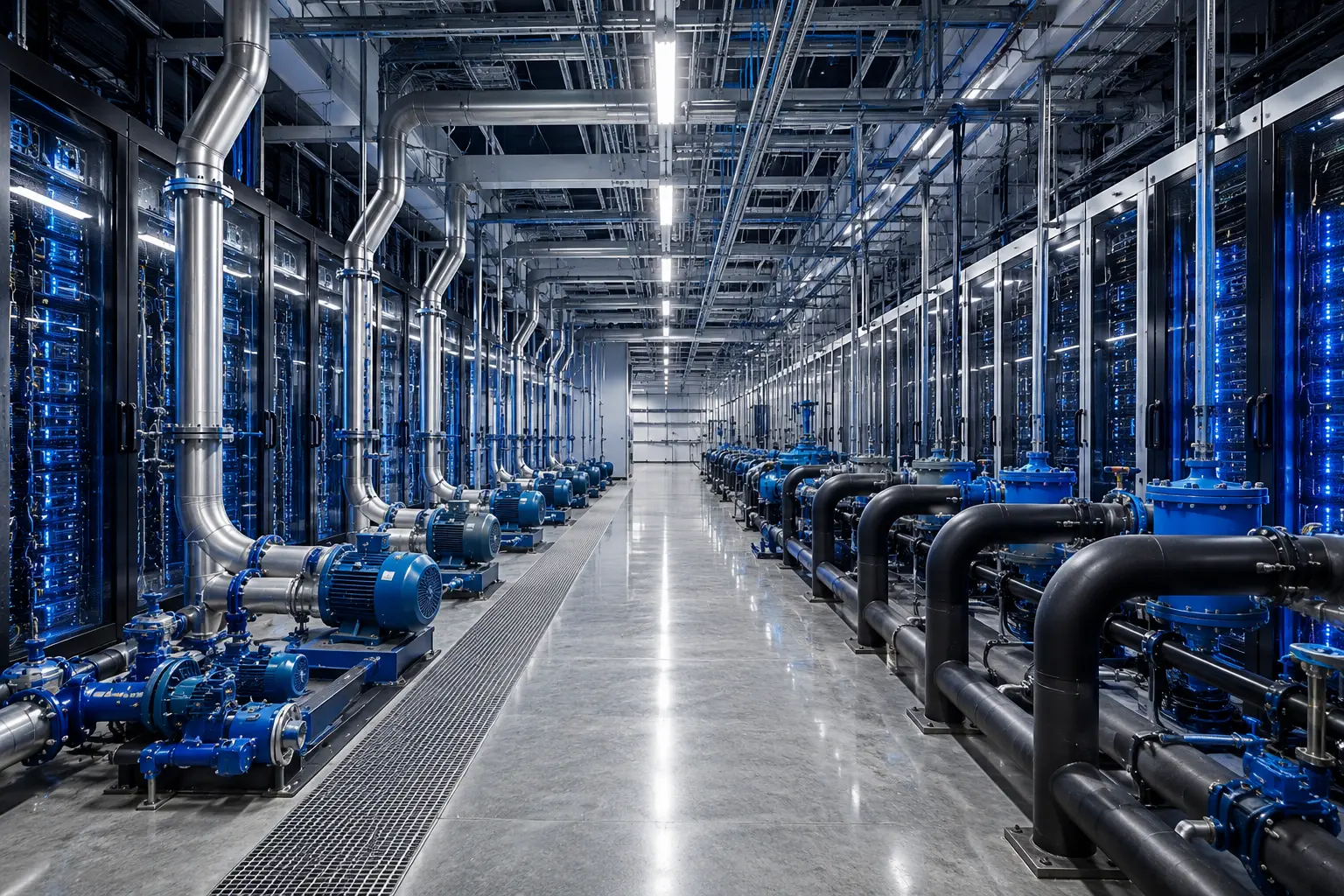
Artificial Intelligence is often discussed in terms of computing power, advanced chips, cloud infrastructure, and massive financial investments. Most conversations focus on software innovation, automation, and the growing capabilities of AI systems.
However, there is another side of the AI revolution that receives far less attention.
Water.
Behind every AI model, chatbot, image generator, and machine learning system are physical facilities operating around the clock. These facilities generate enormous amounts of heat and require sophisticated cooling systems to remain operational.
Bureau Verification Tools
As AI adoption continues expanding globally, water consumption is quietly becoming one of the industry's most important infrastructure challenges.
Many technology companies are now evaluating not only electricity requirements but also long-term access to water resources capable of supporting future AI growth.
Why AI Infrastructure Depends on Physical Resources
Many people imagine AI as purely digital technology.
In reality, AI depends on physical infrastructure including:
- Data centers
- Servers
- Cooling systems
- Power generation
- Network infrastructure
- Storage facilities
Every AI request requires physical computing resources operating somewhere in the world.
As the demand for AI services grows, so does the demand for the infrastructure supporting those services.
Why AI Data Centers Need So Much Cooling
Modern AI servers generate significant heat.
High-performance processors operate continuously while handling large-scale workloads.
Without cooling systems, equipment temperatures can quickly rise beyond safe operating limits.
Cooling helps:
- Protect hardware
- Maintain performance
- Reduce failures
- Extend equipment lifespan
Many facilities use advanced cooling technologies that require substantial amounts of water to manage temperature efficiently.
This issue becomes more significant as AI systems continue scaling across industries.

The Growing Scale of AI Infrastructure
Technology companies are investing billions of dollars into AI infrastructure.
New facilities are being constructed across multiple regions to support:
- AI model training
- Cloud services
- Business automation
- Consumer applications
- Scientific research
The larger these facilities become, the greater their demand for both energy and cooling resources.
Water is increasingly becoming part of the infrastructure conversation.
Why Water Availability Could Become a Strategic Issue
For decades, discussions about technology infrastructure focused mainly on electricity, networking capacity, and computing power.
Today, water is becoming part of the conversation.
Many modern data centers are being built in locations where reliable access to water is available. This is not accidental. As computing infrastructure expands, operators must ensure they have access to the resources necessary to keep facilities operating efficiently.
In some regions, growing populations, industrial development, and climate pressures are already increasing competition for water resources.
When AI infrastructure is added to that equation, long-term planning becomes even more important.
Future technology hubs may increasingly be selected not only based on energy availability but also on water access, environmental regulations, and sustainability goals.
This shift could influence where future AI investments are made and which regions become major technology centers.

How Technology Companies Are Responding
Large technology companies are already aware of these challenges.
Many organizations are investing heavily in more efficient cooling systems designed to reduce water consumption while maintaining performance.
Several approaches are being explored:
Advanced Cooling Technologies
New cooling systems are being developed to improve efficiency and reduce resource consumption.
These include:
-
Liquid cooling
-
Closed-loop cooling systems
-
Air-assisted cooling
-
Heat recovery technologies
Many of these solutions are designed to minimize waste while improving operational efficiency.
Infrastructure Optimization
Technology companies are also improving hardware efficiency.
More efficient processors generate less heat and require fewer cooling resources.
Even small improvements become significant when applied across thousands of servers operating continuously.
Sustainability Reporting
Investors, regulators, and customers increasingly expect transparency.
As a result, many organizations are publishing sustainability reports that include information related to energy use, carbon emissions, and resource management.
This trend is expected to continue as AI infrastructure expands globally.
The Link Between AI Growth and Sustainability
Artificial Intelligence is often presented as a tool capable of solving major global challenges.
AI can help improve:
-
Energy efficiency
-
Healthcare systems
-
Scientific research
-
Supply chain management
-
Climate modeling
However, supporting these systems requires significant infrastructure.
This creates an important balance.
Technology companies must continue innovating while also ensuring that growth remains sustainable.
The conversation is no longer limited to computing power alone.
Questions increasingly include:
-
How much energy does AI require?
-
How much water is consumed?
-
How can infrastructure become more efficient?
-
What resources will future AI systems need?
These questions are becoming central to long-term technology planning.
Sustainability is moving from a public relations topic to a core business strategy.
Organizations that successfully balance innovation with responsible resource management may gain competitive advantages in the years ahead.
Why Governments Are Paying Attention
Governments around the world are paying closer attention to AI infrastructure investments.
Artificial intelligence is increasingly viewed as a strategic national capability.
Countries are competing to attract:
-
Data centers
-
Semiconductor manufacturing
-
Cloud infrastructure
-
AI research facilities
-
Advanced technology investment
At the same time, governments must also consider environmental impact and resource planning.
Large-scale technology facilities influence:
-
Electricity demand
-
Water usage
-
Regional infrastructure
-
Economic development
As AI infrastructure expands, policymakers may introduce additional standards related to sustainability, reporting requirements, and resource efficiency.
Future regulations could play a significant role in determining where AI facilities are built and how they operate.
Future Outlook
The next phase of AI growth will likely involve much more than software development.
Infrastructure planning is becoming increasingly important.
Future technology leaders may be defined not only by the quality of their AI systems but also by how efficiently they manage the resources supporting those systems.
Several trends are expected to shape the future:
Smarter Data Centers
Future facilities will likely use advanced automation to optimize cooling, energy consumption, and resource utilization.
Sustainable Infrastructure Design
New projects may prioritize environmental performance from the beginning rather than adding sustainability measures later.
Resource-Efficient AI Models
Developers are already exploring ways to reduce the computing requirements of AI systems while maintaining performance.
More efficient models could reduce both energy and water demands.
Increased Public Awareness
As AI becomes more integrated into daily life, public attention toward infrastructure impacts is expected to increase.
Questions about sustainability, energy use, and environmental responsibility will likely become more common.
The future of artificial intelligence may depend not only on breakthroughs in algorithms but also on the ability to build infrastructure that can scale responsibly.
Conclusion
Artificial Intelligence is transforming industries around the world, but the infrastructure supporting that transformation often remains hidden from public view.
One of the least discussed aspects of AI growth is water consumption.
Data centers require sophisticated cooling systems, and many of those systems depend on reliable access to water resources.
As AI adoption continues accelerating, the relationship between technology infrastructure and sustainability will become increasingly important.
Organizations that invest in efficient infrastructure, responsible resource management, and long-term sustainability planning may be better positioned for future growth.
The future of AI is not only about smarter machines.
It is also about building systems capable of supporting innovation responsibly and sustainably for decades to come.
Frequently Asked Questions
Why do AI data centers use water?
Many data centers use water-based cooling systems to manage heat generated by high-performance computing equipment. Cooling helps maintain performance and protect hardware.
Is water consumption becoming a challenge for AI infrastructure?
As AI infrastructure grows, water usage is becoming a more important consideration, particularly in regions facing resource constraints or increasing demand.
How are technology companies reducing water usage?
Companies are investing in advanced cooling technologies, infrastructure optimization, and more efficient hardware to reduce resource consumption.
Why are governments interested in AI infrastructure sustainability?
Large technology facilities affect energy demand, water resources, and regional development. Governments want to ensure long-term growth remains sustainable.
Will future AI systems require less water?
Advances in hardware efficiency, cooling technology, and AI model optimization may help reduce future resource requirements, although demand for AI services is also expected to increase.
Sources & References
Google Data Centers:
https://cloud.google.com/data-centers
International Energy Agency:
https://www.iea.org
Google Sustainability:
https://sustainability.google


Discussion & Feedback
Join The Discourse
Comments are reviewed for technical quality.