
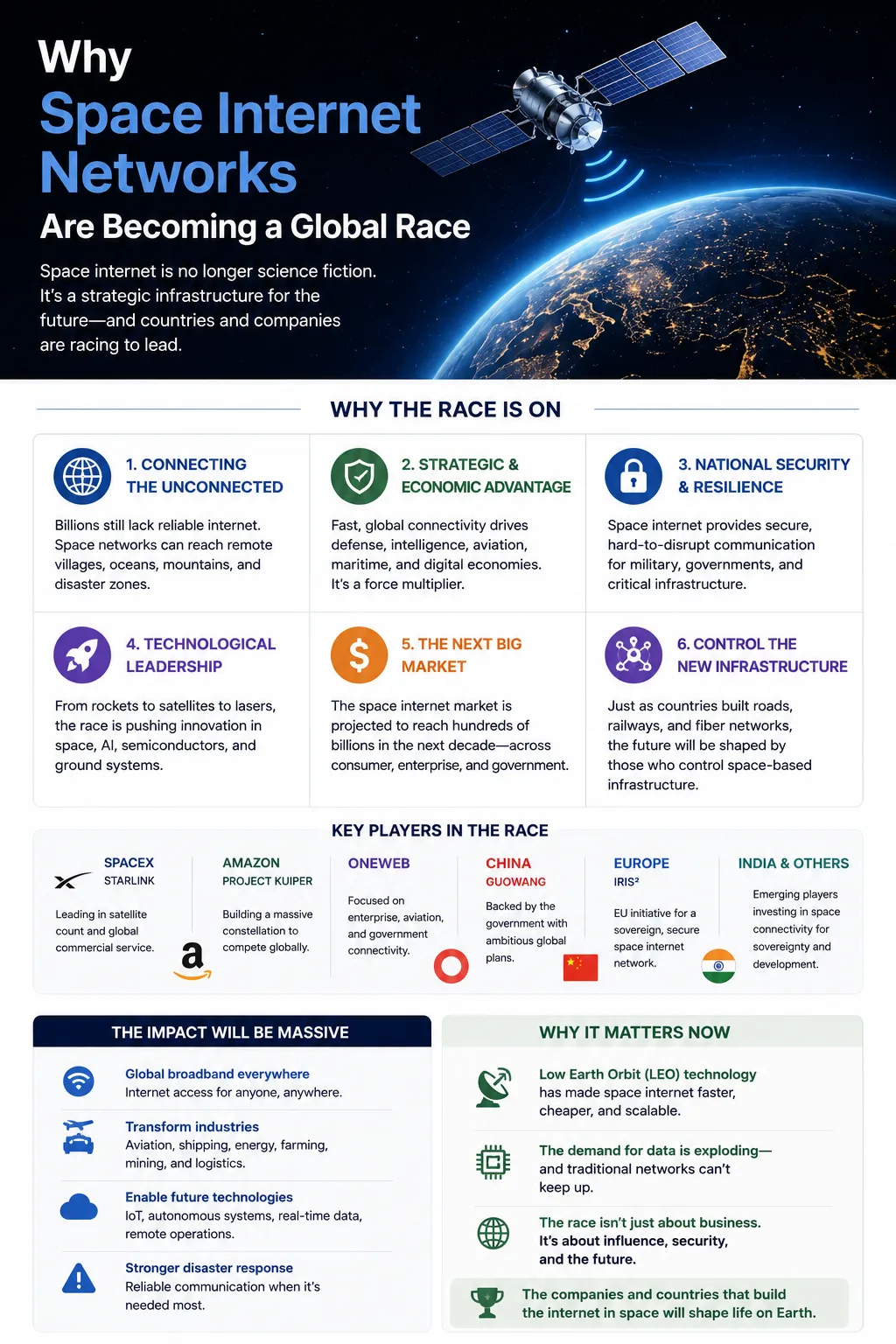
The global internet industry is entering a completely new phase, and much of the competition is now moving far beyond traditional telecom towers and underground fiber networks. In 2026, one of the biggest technology races happening worldwide involves private space-based internet systems.
What once sounded like science fiction is quickly becoming part of real global infrastructure strategy.
Private companies are launching massive satellite networks into low Earth orbit with the goal of building global internet coverage systems capable of reaching remote regions, ships, aircraft, disaster zones, and underserved populations.
Why Are Space Internet Networks Becoming Important?
Private space internet networks are becoming important because companies are building satellite systems capable of delivering global internet access, digital infrastructure, and connectivity services from space-based networks.
Bureau Verification Tools
This is no longer only about internet access. It is becoming a battle over future digital infrastructure, global connectivity, national influence, and long-term technology control.
Why Traditional Internet Infrastructure Has Limits
For years, internet connectivity depended mainly on:
- Fiber optic networks
- Mobile towers
- Undersea cables
- Regional telecom infrastructure
While these systems remain extremely important, they also face limitations in remote regions, rural areas, oceans, mountains, and developing infrastructure zones.
Space-based internet systems are being positioned as a way to overcome some of those limitations.
Satellite Internet Technology Is Improving Rapidly
Earlier satellite internet systems often suffered from:
- Slow speeds
- High latency
- Expensive equipment
- Limited reliability
Modern low Earth orbit satellite networks are changing that.
Low Earth Orbit Systems Reduce Delay
Unlike older satellite systems operating much farther from Earth, newer low Earth orbit networks can deliver lower latency and improved connectivity performance.
This is making satellite internet more practical for:
- Video communication
- Remote work
- Business operations
- Online education
- Cloud services
Private Companies Are Competing Aggressively
One of the reasons this industry is attracting so much attention is private sector involvement.
Technology and space companies are investing billions into satellite infrastructure, launch systems, and global network expansion.
Companies like SpaceX have accelerated industry interest through large-scale satellite deployment strategies connected to global internet services.
Businesses and researchers continue monitoring developments from Starlink and other satellite internet initiatives closely.
Space Internet Is Becoming Strategic Infrastructure
Governments are increasingly treating satellite internet as critical infrastructure rather than optional technology.
Reliable global internet access affects:
- National security
- Emergency communication
- Economic development
- Remote connectivity
- Military systems
- Disaster response
Because of this, countries are becoming highly interested in controlling or supporting advanced space communication systems.
Rural Connectivity Is Driving Demand
One of the strongest arguments supporting satellite internet expansion is rural and underserved region access.
Millions of people worldwide still face unreliable or limited internet infrastructure.
Satellite networks may help improve:
- Remote education
- Digital healthcare
- Online business access
- Communication systems
- Financial inclusion
in regions where traditional infrastructure expansion remains difficult.
The Space Economy Is Expanding Rapidly
Private internet networks are part of a much larger shift happening within the global space economy.
Space is increasingly becoming connected to:
- Telecommunications
- Data infrastructure
- Navigation systems
- Cloud connectivity
- Commercial services
- Defense systems
This is creating new investment opportunities across multiple industries.
Organizations such as NASA and European Space Agency (ESA) continue tracking space technology development and infrastructure innovation globally.
Businesses Are Interested in Global Connectivity
Companies operating internationally are also paying attention to satellite internet systems.
Reliable global connectivity may become increasingly valuable for:
- Shipping industries
- Aviation companies
- Energy infrastructure
- Remote operations
- International logistics
- Emergency services
Space-based internet systems may eventually support more resilient global communication networks.
Competition Is Increasing Across Countries
The battle around satellite internet is not limited to private businesses alone.
Countries are increasingly investing in:
- Space communication systems
- Satellite manufacturing
- Launch capabilities
- Digital infrastructure independence
Many governments view satellite internet as part of long-term geopolitical and technological strategy.
Space Debris Concerns Are Growing
As more satellites enter orbit, concerns around space congestion and debris are becoming more serious.
Experts are warning about:
- Orbital traffic
- Satellite collisions
- Long-term space debris risks
- Infrastructure sustainability
The future growth of satellite networks may depend heavily on responsible space management.
Regulation and Global Control Challenges
Space internet systems also create regulatory questions involving:
- Global communication rights
- Spectrum management
- International oversight
- National security concerns
- Data governance
As these systems expand, governments and international organizations may introduce stricter regulatory frameworks.
Future Technologies Could Expand Space Connectivity Further
Industry experts believe future satellite internet systems may eventually integrate with:
- AI-powered routing
- Autonomous communication systems
- Smart infrastructure
- Emergency response networks
- Space-based cloud computing
The line between terrestrial internet infrastructure and space-based systems is gradually becoming smaller.
The Economics of Space Internet
Building satellite internet infrastructure requires:
- Rocket launches
- Satellite manufacturing
- Ground stations
- Network maintenance
- Advanced communication systems
This makes the industry extremely capital-intensive, creating advantages for companies with strong financial and technological resources.
The Future of Global Connectivity
Many experts believe future internet infrastructure may become increasingly hybrid, combining:
- Fiber networks
- Mobile infrastructure
- Satellite systems
- Cloud computing platforms
This could create more resilient and globally connected communication ecosystems.
Final Thoughts
Private space internet networks are becoming one of the most important infrastructure battles connected to the future digital economy.
As global internet demand continues growing, companies and governments are investing heavily in satellite communication systems capable of expanding connectivity far beyond traditional infrastructure limitations.
The future of internet access may no longer depend only on what exists on the ground. Increasingly, it may depend on the infrastructure being built above the planet itself.
The businesses and countries leading this next phase of space-based connectivity could shape the future of global communication, digital infrastructure, and technological influence for decades to come.
Sources & References
FAQ
What are space internet networks?
Space internet networks use satellites in orbit to provide internet connectivity across global regions.
Why are private companies building satellite internet systems?
Companies are investing in satellite networks to expand global connectivity and future digital infrastructure services.
What is low Earth orbit satellite internet?
Low Earth orbit satellite systems operate closer to Earth, helping reduce internet latency and improve performance.
Why is satellite internet important for rural areas?
Satellite internet can provide connectivity in regions where traditional telecom infrastructure is difficult to build.
What is the future of space internet infrastructure?
Experts expect satellite internet systems to become a major part of future global communication and digital infrastructure networks.



Discussion & Feedback
Join The Discourse
Comments are reviewed for technical quality.