
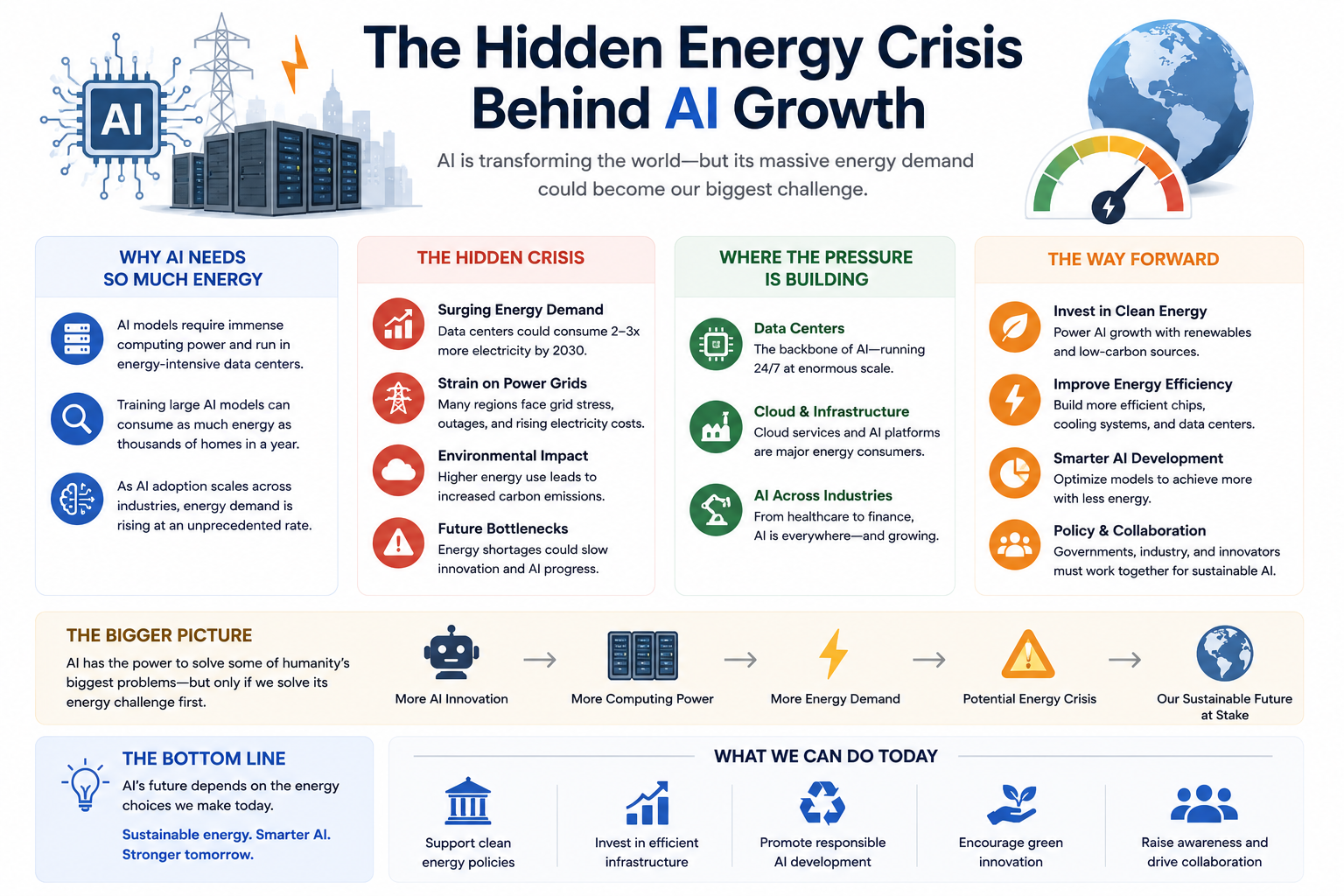
Artificial Intelligence is growing faster than almost anyone expected. Businesses, governments, startups, and technology companies are racing to integrate AI into everything from customer support and healthcare to finance, automation, and digital infrastructure.
But behind the excitement surrounding AI innovation, another conversation is quietly becoming more serious — energy consumption.
Most people see AI as software running inside apps, websites, or cloud systems. What many do not realize is that modern AI systems depend on enormous physical infrastructure operating continuously behind the scenes.
Every image, chatbot conversation, recommendation system, voice assistant, and machine learning model requires computing power. And that computing power depends heavily on electricity.
Bureau Verification Tools
Why Is AI Creating an Energy Crisis?
AI systems require massive computing infrastructure and data centers that consume enormous amounts of electricity. In 2026, the rapid growth of artificial intelligence is increasing global energy demand significantly, creating concerns around sustainability, power infrastructure, and long-term energy availability.
In 2026, experts are increasingly warning that the rapid expansion of artificial intelligence may create one of the biggest long-term energy challenges the technology industry has ever faced.
AI Infrastructure Is Expanding Rapidly
The global demand for AI services has created a massive increase in data center construction worldwide.
Technology companies are investing billions into:
- AI servers
- GPU infrastructure
- Cloud computing systems
- Machine learning platforms
- Large-scale data centers
This infrastructure requires enormous amounts of power to operate continuously.
Unlike traditional software systems, advanced AI models process massive amounts of data and require high-performance hardware operating at large scale.
Data Centers Are Becoming Energy-Heavy Operations
Modern AI systems rely heavily on data centers.
These facilities store, process, and manage enormous amounts of information while powering AI operations across the internet.
AI Processing Requires Huge Computing Power
Training advanced AI models can require thousands of high-performance GPUs operating for long periods.
The more advanced AI systems become, the more computational resources they need.
This increases:
- Electricity demand
- Cooling requirements
- Hardware usage
- Infrastructure expansion
at a much larger scale than many industries anticipated.
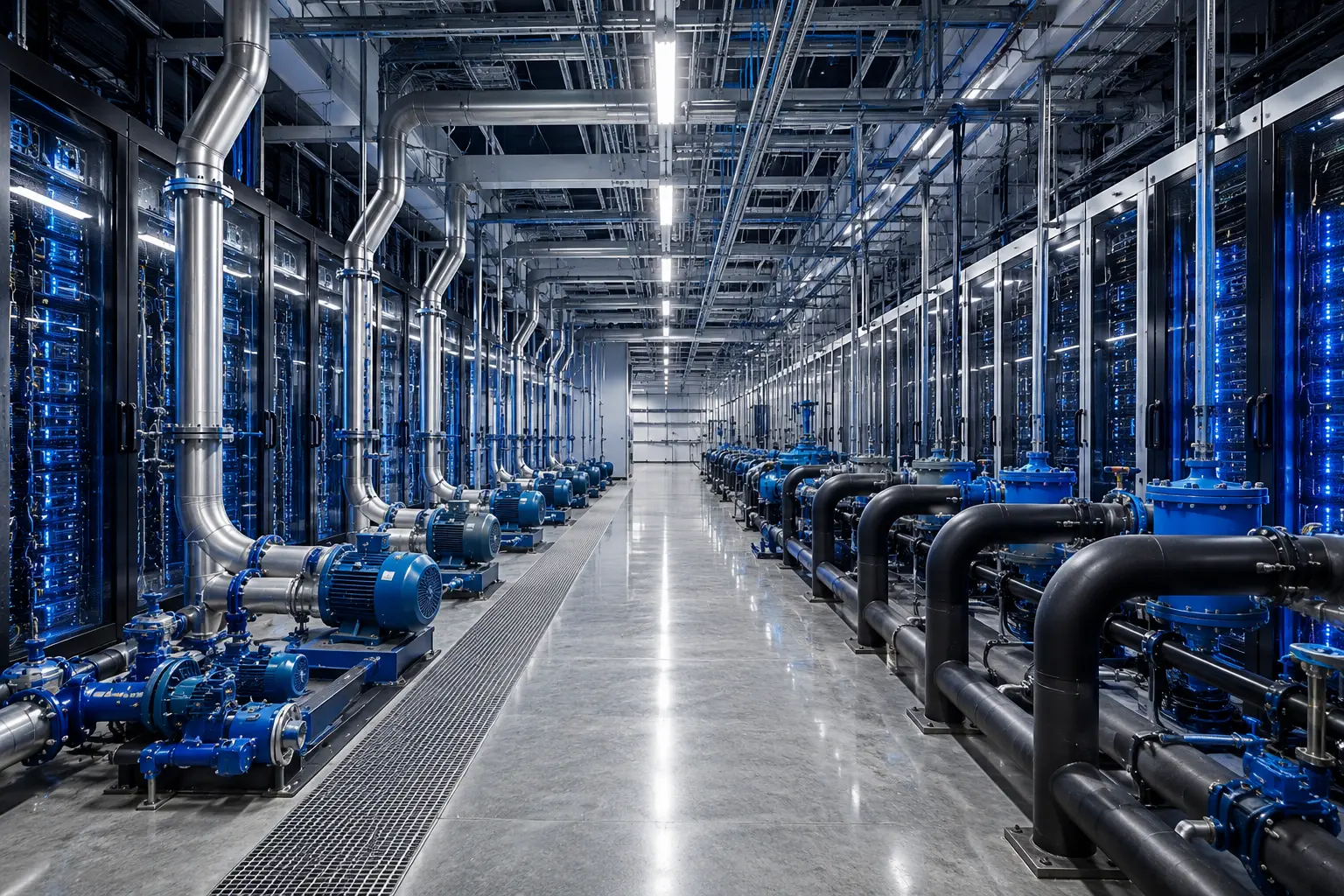
Cooling Systems Consume Massive Energy
One hidden issue behind AI growth is cooling.
AI servers generate large amounts of heat, forcing data centers to use complex cooling systems continuously.
In some facilities, cooling infrastructure itself consumes enormous energy alongside the computing hardware.
Technology Companies Are Facing Energy Pressure
Major technology companies are now under increasing pressure to secure long-term energy resources for AI expansion.
Businesses investing heavily in AI infrastructure are also investing aggressively in:
- Renewable energy projects
- Solar power systems
- Nuclear energy discussions
- Smart grid partnerships
- Sustainable data center designs
This is because future AI growth may eventually depend as much on energy availability as software innovation itself.
Organizations such as International Energy Agency (IEA) continue tracking rising electricity demand connected to digital infrastructure and AI systems.
AI Growth Is Increasing Global Electricity Demand
Experts are beginning to compare the AI infrastructure boom to earlier industrial and internet revolutions.
The difference is that AI systems consume much larger computing resources continuously.
AI Demand Is Scaling Quickly
Millions of businesses and consumers now use AI-powered tools daily.
This includes:
- AI chat systems
- Image generation tools
- Recommendation engines
- Cloud AI services
- Automation platforms
- Voice AI systems
Every request processed through these systems contributes to growing energy demand behind the scenes.
Renewable Energy Is Becoming Critical for AI
One reason renewable energy discussions are becoming more connected with AI is sustainability.
Technology companies understand that relying only on traditional energy systems may become difficult as AI infrastructure scales globally.
Solar and Wind Investments Are Increasing
Many companies building AI infrastructure are investing in:
- Solar farms
- Wind energy projects
- Battery storage systems
- Green data centers
The goal is to support AI growth while reducing environmental impact.
Sustainable AI Is Becoming a Major Industry Topic
Businesses are increasingly discussing how to make AI systems more energy-efficient.
This includes improving:
- Hardware optimization
- AI model efficiency
- Cooling technologies
- Power management systems
Governments Are Watching AI Infrastructure Closely
Governments worldwide are also becoming more interested in the relationship between AI growth and national energy systems.
Large-scale AI infrastructure affects:
- Electricity grids
- Energy policy
- Environmental targets
- Industrial planning
- Technology competitiveness
Some countries are already competing aggressively to attract AI infrastructure investments while balancing energy availability concerns.
Smaller AI Companies May Face Infrastructure Challenges
One major concern is that AI infrastructure costs are becoming extremely expensive.
Building advanced AI systems requires:
- High-end computing hardware
- Massive energy access
- Advanced cooling systems
- Expensive operational infrastructure
This may create long-term advantages for larger companies with stronger financial resources and energy partnerships.
AI and Environmental Concerns Are Becoming Connected
As AI adoption expands, environmental discussions are becoming more serious.
Critics are increasingly questioning:
- AI electricity usage
- Water consumption for cooling
- Hardware manufacturing impact
- Carbon emissions connected to infrastructure
This is pushing technology companies toward greener operational strategies.
Organizations like United Nations Environment Programme (UNEP) and World Economic Forum are increasingly discussing sustainability and digital infrastructure together.
The Future of AI May Depend on Energy Innovation
Many experts now believe the future of AI may depend not only on software breakthroughs, but also on energy innovation.
Future AI infrastructure trends may include:
- Energy-efficient chips
- AI-optimized cooling systems
- Nuclear-powered data centers
- Smart energy grids
- Sustainable cloud infrastructure
- Renewable-powered AI facilities
Technology growth and energy strategy are becoming increasingly connected.
Businesses Are Starting to Notice Infrastructure Costs
Earlier, many companies focused mainly on AI capabilities and automation potential.
Now businesses are also starting to consider:
- Infrastructure scalability
- Long-term operating costs
- Energy requirements
- Sustainability concerns
This may influence how AI systems are designed and deployed in the future.
Final Thoughts
Artificial Intelligence is transforming industries at extraordinary speed, but the hidden infrastructure supporting that growth is creating a new global challenge around energy consumption and sustainability.
The future of AI is no longer only a software conversation. It is increasingly becoming an infrastructure and energy conversation as well.
Technology companies, governments, and researchers are now realizing that scaling AI globally may require major innovation not only in computing, but also in how energy is produced, managed, and distributed.
The businesses and countries that solve this balance between AI expansion and sustainable energy may shape the next phase of the global technology industry.
Sources & References
FAQ
Why does AI consume so much energy?
AI systems require massive computing power, data centers, and cooling infrastructure to process large amounts of data continuously.
What is the hidden energy crisis behind AI?
The rapid growth of AI infrastructure is increasing global electricity demand significantly, creating sustainability and energy supply concerns.
Why are data centers important for AI?
Data centers power AI systems by providing the computing infrastructure needed for machine learning, cloud services, and AI processing.
Are technology companies investing in renewable energy for AI?
Yes, many companies are investing in solar, wind, and sustainable energy projects to support AI infrastructure growth.
What is the future of sustainable AI?
Experts expect future AI systems to focus more on energy-efficient hardware, green data centers, and renewable-powered infrastructure.


Discussion & Feedback
Join The Discourse
Comments are reviewed for technical quality.