
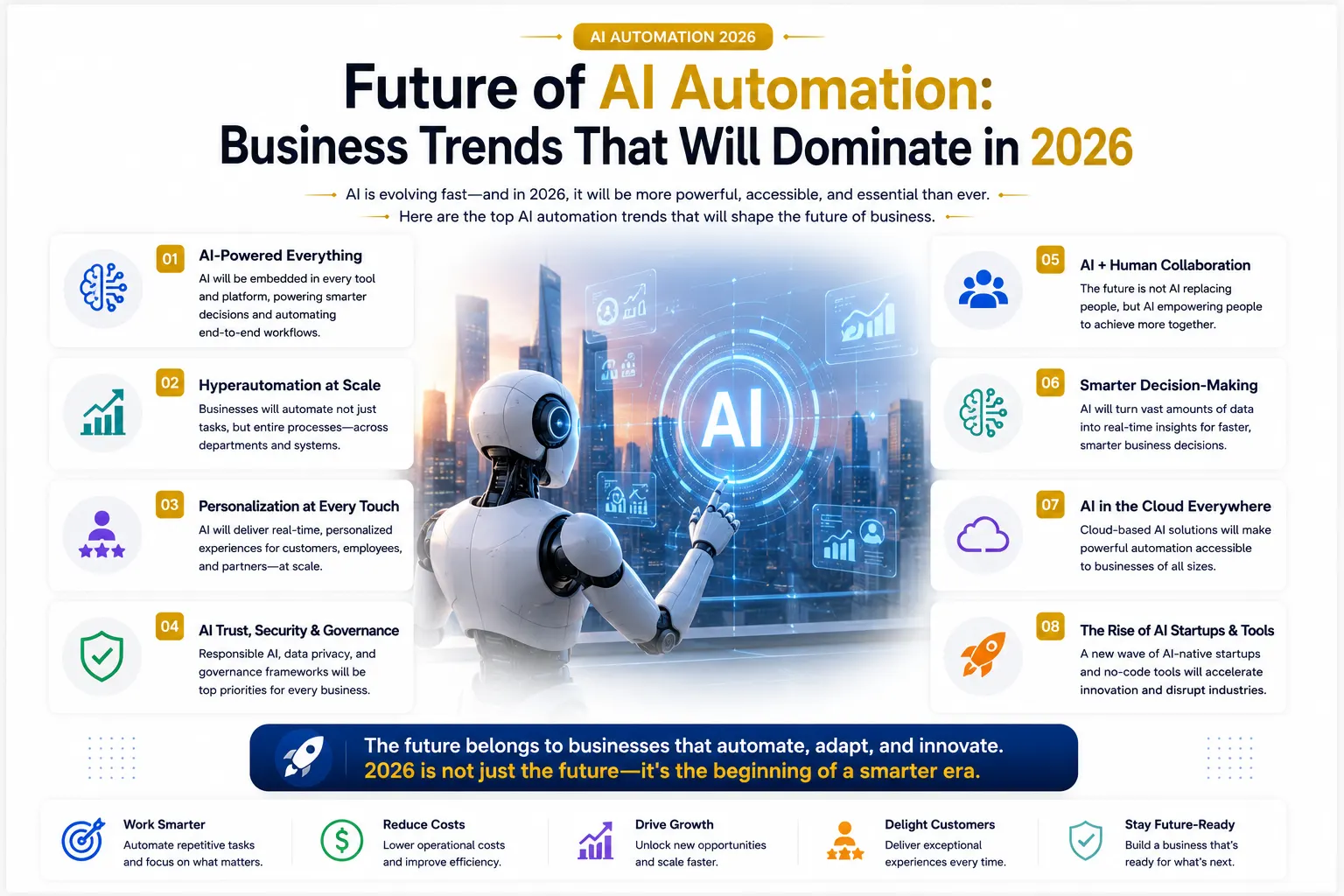
Artificial Intelligence is moving faster than most businesses expected. What looked experimental just a few years ago is now becoming part of daily operations across industries. In 2026, AI automation is no longer limited to large tech companies or enterprise software platforms. Small businesses, startups, agencies, eCommerce brands, and even local service providers are integrating AI into their workflows.
The biggest shift happening right now is not simply automation itself. Businesses are moving toward intelligent automation systems that can analyze behavior, make decisions, improve workflows, and respond to customers with minimal human involvement.
Across the business world, companies are trying to find ways to save time, reduce repetitive work, and improve efficiency without constantly increasing operational costs. AI automation has become one of the fastest-growing solutions for achieving that.
What Are the Biggest AI Automation Trends in 2026?
The biggest AI automation trends in 2026 include AI agents, personalized customer experiences, voice AI systems, workflow automation, AI-powered marketing, predictive analytics, and intelligent business operations. Businesses are increasingly using AI to improve efficiency, reduce costs, and automate repetitive tasks.
Bureau Verification Tools
But while adoption is increasing rapidly, the technology itself is also evolving. Several AI trends are starting to shape how businesses may operate over the next few years.
AI Agents Are Becoming the Next Big Shift
One of the most discussed topics in the AI industry right now is the rise of AI agents.
Unlike traditional automation tools that only follow fixed instructions, AI agents are designed to perform tasks more independently. They can collect information, analyze situations, complete actions, and adapt to changing conditions with less human input.
Businesses are already experimenting with AI agents for:
- Customer support
- Research tasks
- Scheduling
- Lead qualification
- Sales assistance
- Data organization
- Workflow management
What makes AI agents different is their ability to handle multi-step tasks rather than simple one-command operations.
Industry experts believe AI agents may become a major part of business systems over the next few years, especially for digital operations.
Hyper-Personalized Customer Experiences
Businesses are increasingly focusing on personalization because customer expectations have changed dramatically.
People now expect businesses to understand their preferences, behavior, and interests automatically.
AI systems are helping companies deliver personalized experiences through:
- Product recommendations
- Customized emails
- Smart advertising
- Personalized website content
- Dynamic pricing systems
- Behavior-based offers
eCommerce companies, streaming platforms, and digital service businesses are leading this trend.
The goal is no longer just reaching customers. Businesses now want to create experiences that feel specifically designed for each individual user.
Voice AI Is Growing Faster Than Expected
Voice AI has improved significantly over the last year.
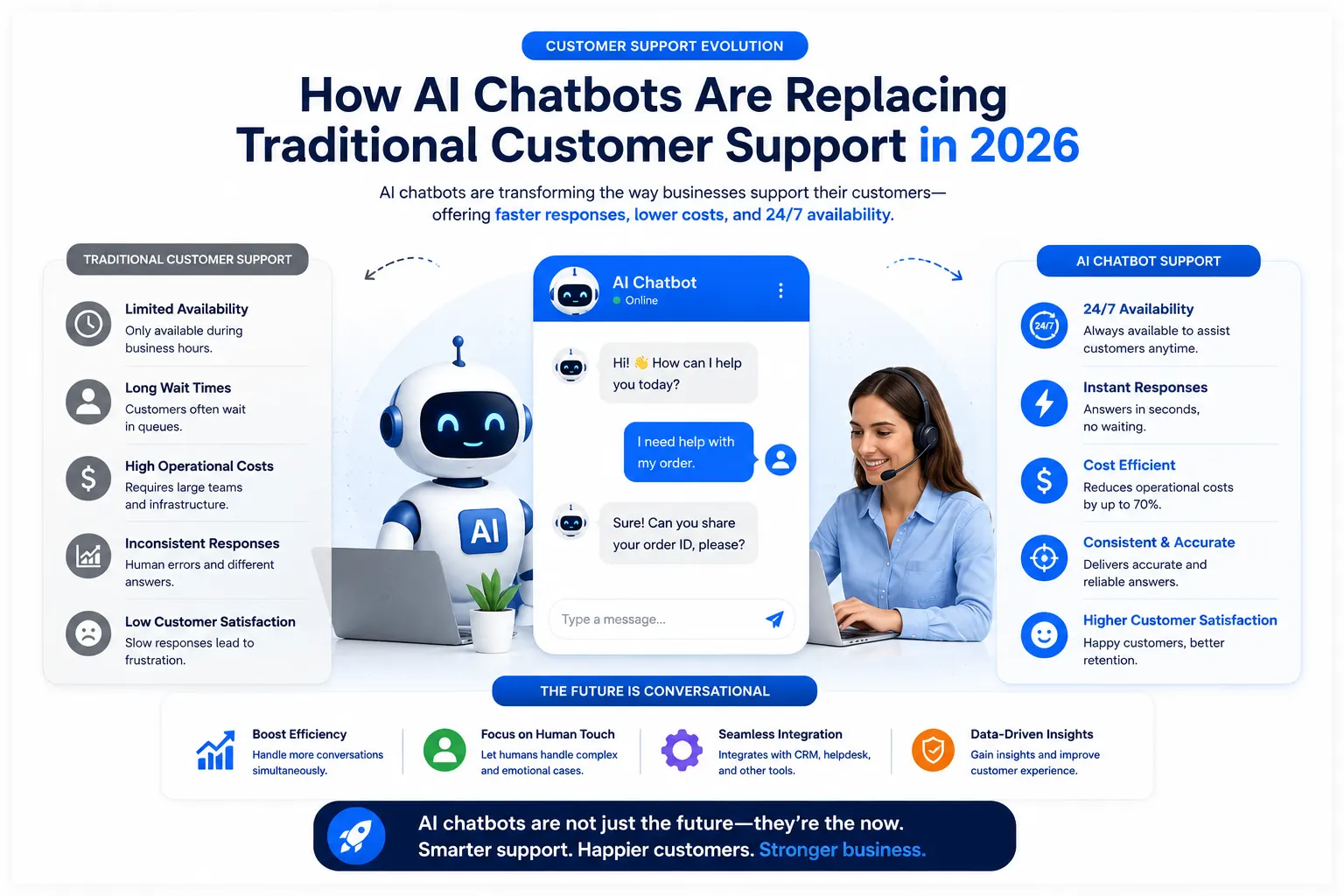
Businesses are increasingly using voice-based AI systems for customer support, appointment handling, virtual assistants, and internal operations.
AI voice assistants are becoming more natural, responsive, and conversational compared to earlier robotic systems.
Several businesses are now automating:
- Customer phone calls
- Appointment confirmations
- Inquiry handling
- Order status updates
- Technical support
Voice AI is especially growing in healthcare, customer service, hospitality, and local business industries.
Workflow Automation Is Becoming Standard
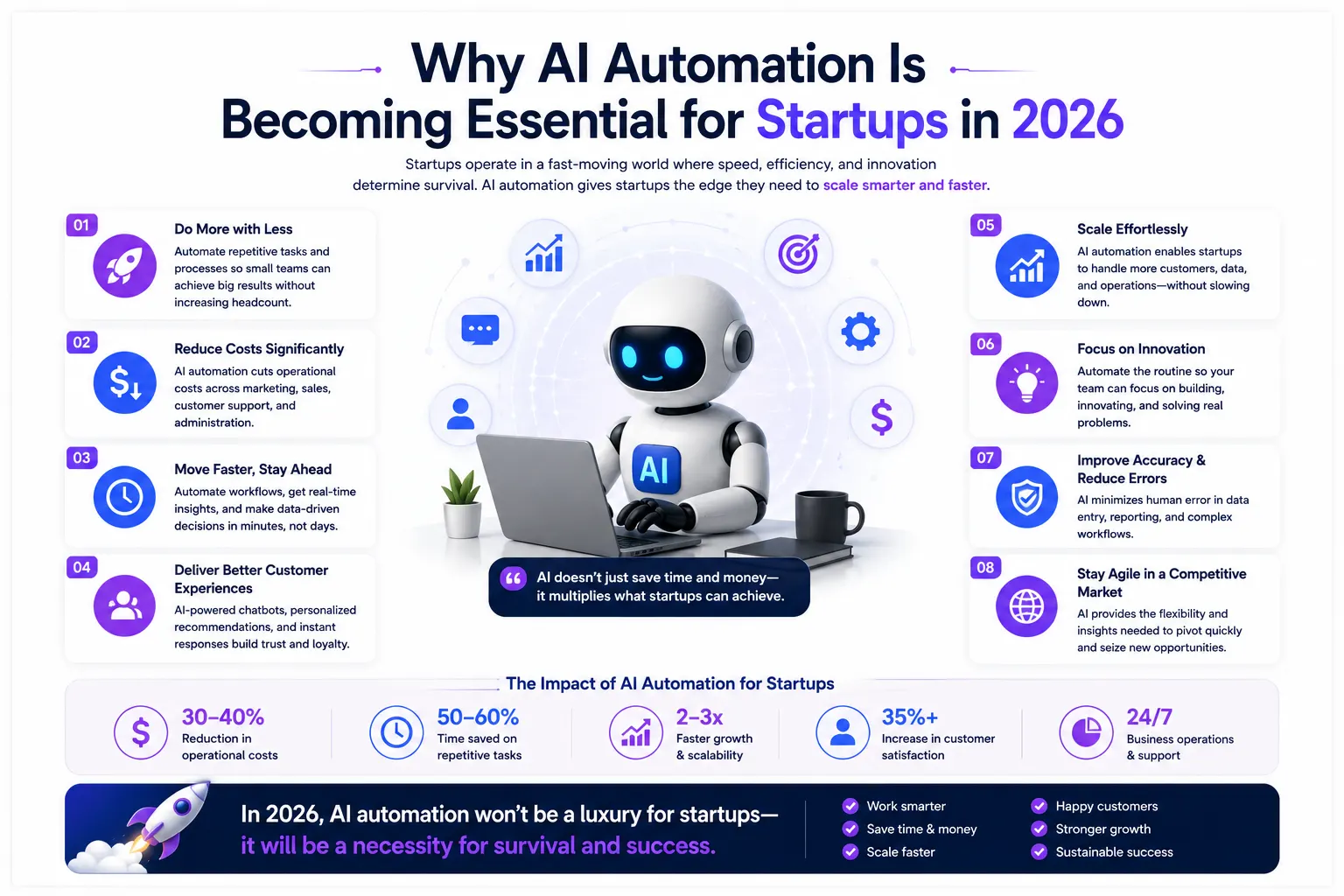
A few years ago, workflow automation was mainly used by larger companies. In 2026, even small businesses are automating internal operations.
Businesses are using AI-powered systems to manage:
- Team coordination
- Task assignments
- CRM updates
- Invoice generation
- Inventory management
- Reporting systems
- Email follow-ups
This shift is helping companies reduce manual workload while improving speed and organization.
The businesses adapting quickly are often able to scale operations more efficiently than competitors still relying heavily on manual processes.
AI-Powered Marketing Is Changing Digital Growth
Marketing is becoming one of the most AI-driven areas in business.
Companies are now using AI tools to:
- Generate content ideas
- Optimize ad campaigns
- Analyze audience behavior
- Create email sequences
- Improve SEO planning
- Automate social media management
However, businesses are also learning that fully automated marketing often feels generic.
Brands seeing long-term success are usually combining AI efficiency with human creativity and original storytelling.
That balance is becoming increasingly important as online competition grows.
Predictive Analytics Is Becoming More Important
Businesses are no longer using AI only for automation. They are also using it for prediction.
AI systems can now analyze large amounts of business data and identify patterns much faster than manual analysis.
Companies are using predictive analytics for:
- Sales forecasting
- Customer behavior analysis
- Inventory planning
- Marketing optimization
- Fraud detection
- Business decision-making
This allows businesses to react faster to market changes and customer trends.
The Growing Concern Around AI Content
As content becomes more common online, businesses are starting to face new challenges.
Search engines are becoming better at identifying low-quality, repetitive, and mass-produced content.
Many websites rushed into publishing fully AI-written articles at scale, but some are now struggling with weak engagement and declining trust.
Businesses are realizing that content still needs:
- Human editing
- Real experiences
- Research
- Original insights
- Strong storytelling
The companies building authority online are usually the ones using AI as assistance rather than full replacement.
Human Creativity Still Matters
Despite rapid AI growth, businesses are also recognizing the importance of human creativity more than ever.
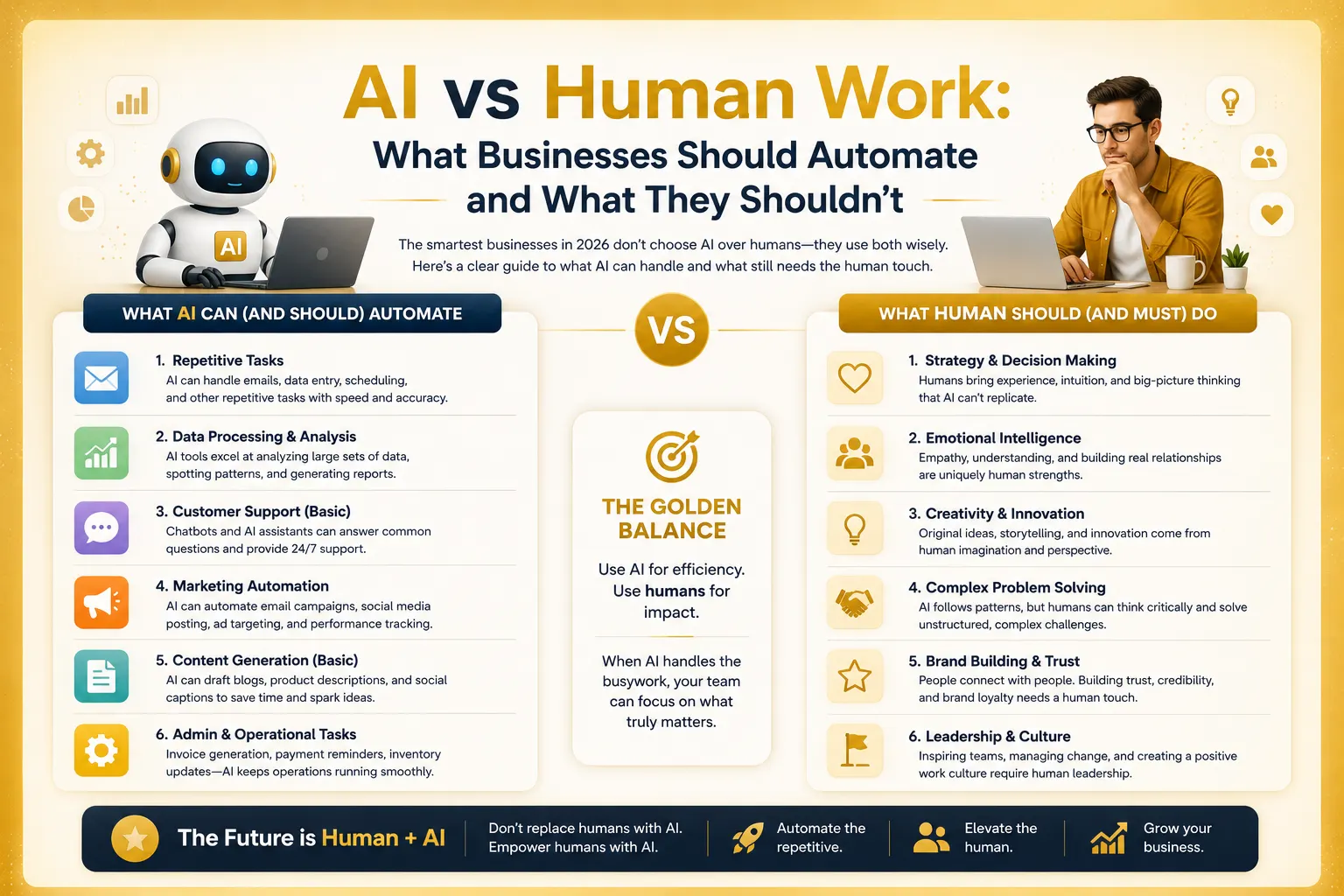
AI can automate processes and analyze data, but it still struggles with:
- Emotional storytelling
- Brand identity
- Creative direction
- Relationship building
- Strategic thinking
The businesses standing out in crowded industries are often those combining automation with genuine human communication.
That hybrid approach is becoming one of the biggest business strategies in 2026.
Final Thoughts
AI automation is evolving from simple workflow tools into intelligent business systems capable of handling increasingly complex tasks.
Businesses adopting automation early are gaining advantages in productivity, speed, customer experience, and operational efficiency. At the same time, companies relying too heavily on automation without human oversight are facing quality and trust issues.
The future of AI automation is unlikely to be about replacing humans completely. Instead, the strongest businesses will probably be the ones that use AI to remove repetitive work while allowing people to focus on creativity, strategy, and innovation.
That balance is where the biggest long-term opportunities are emerging.
FAQ
What are the biggest AI automation trends in 2026?
AI agents, workflow automation, voice AI, predictive analytics, and personalized customer experiences are among the biggest AI trends in 2026.
What are AI agents?
AI agents are advanced AI systems capable of handling multi-step tasks independently with minimal human involvement.
How are businesses using AI automation?
Businesses are using AI for customer support, marketing, scheduling, reporting, CRM management, and workflow optimization.
Will AI replace human workers completely?
Most experts believe AI will automate repetitive tasks, while humans continue handling creativity, strategy, and relationship-based work.
Why is AI personalization becoming important?
Customers now expect personalized experiences, and AI helps businesses deliver customized recommendations, communication, and marketing more efficiently.
Discussion & Feedback
Join The Discourse
Comments are reviewed for technical quality.