
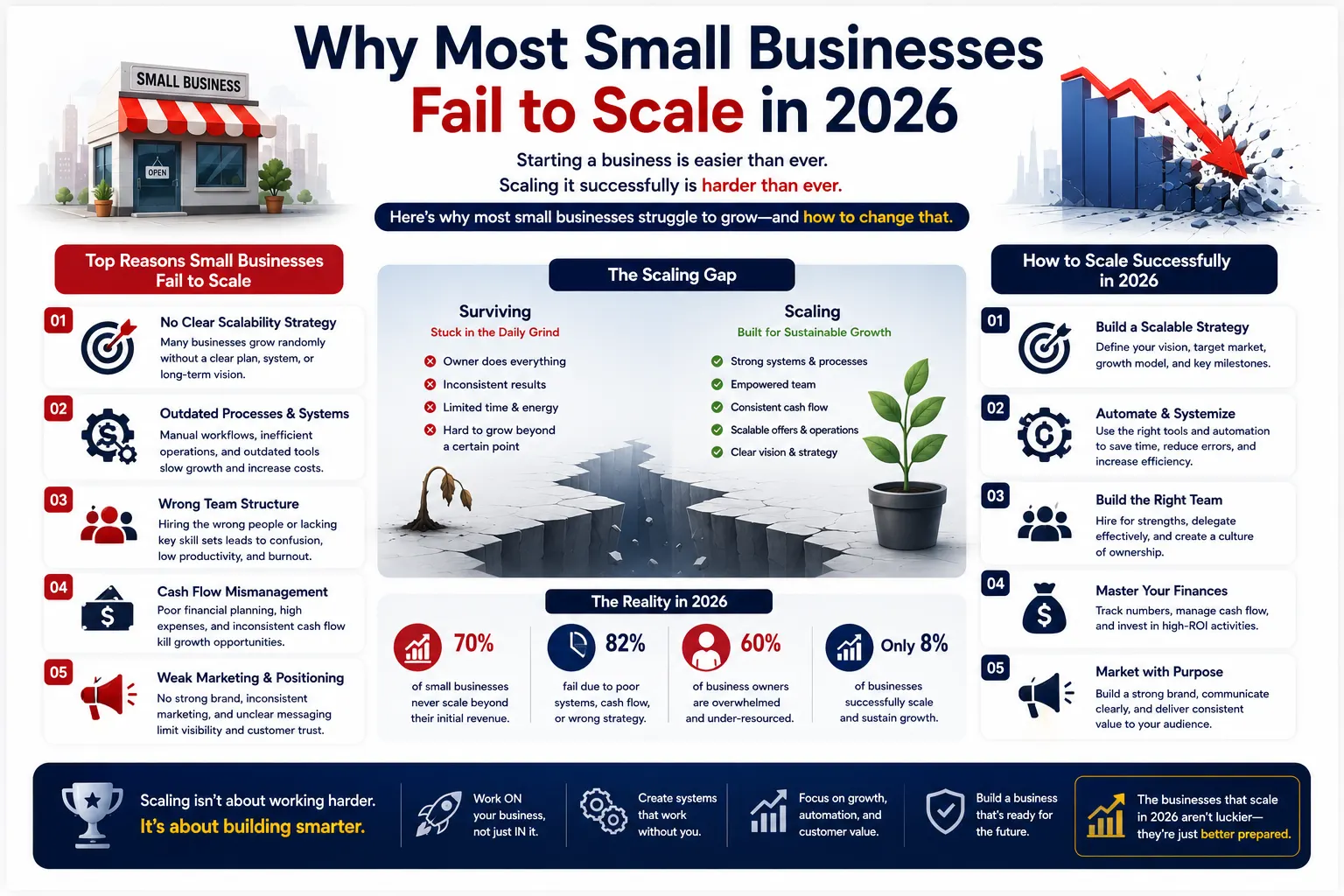
Starting a business is difficult, but scaling one has become even harder in 2026.
Every year thousands of small businesses launch with excitement, good ideas, and strong motivation. Some grow quickly, while many others struggle to move beyond a certain point. Interestingly, the problem is often not the product itself. Many businesses fail to scale because the systems behind the business are not prepared for growth.
The business environment today is moving much faster than before. Customer expectations are higher, competition is stronger, and digital visibility now affects almost every industry. Businesses that rely only on hard work without building proper structure usually hit limits very quickly.
Why Do Small Businesses Fail to Scale?
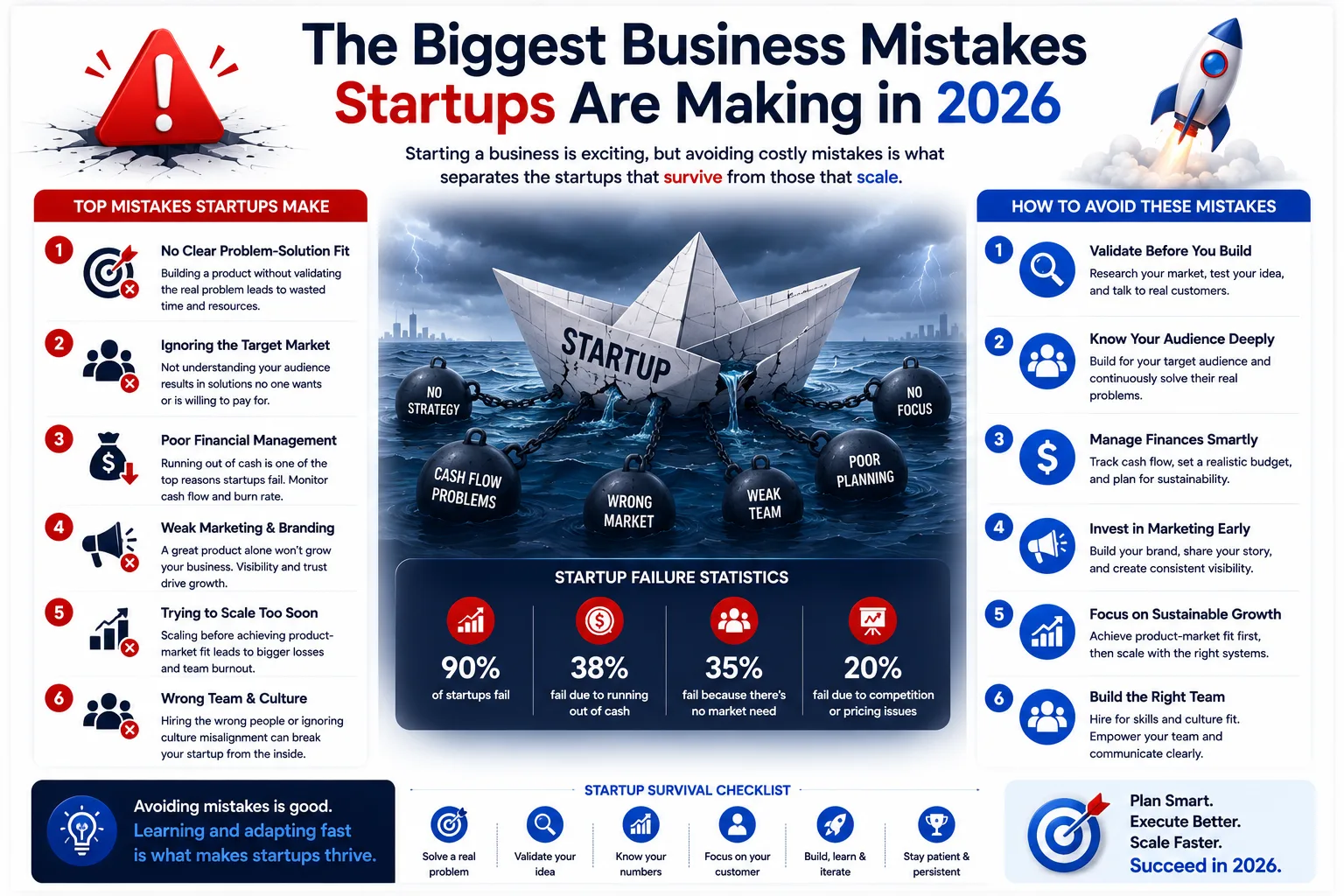
Most small businesses fail to scale because of poor planning, weak systems, inconsistent marketing, lack of financial management, and failure to adapt to changing customer behavior. In 2026, businesses that focus on strategy, customer experience, automation, and long-term growth are scaling more successfully.
Bureau Verification Tools
One common misconception is that growth automatically comes from getting more customers. In reality, scaling successfully depends on how efficiently a business can handle growth without damaging quality, customer trust, or operations.
Many Businesses Focus on Sales but Ignore Systems
One of the biggest reasons small businesses struggle to scale is poor operational structure.
In the beginning, many businesses operate informally. Owners handle everything themselves — customer support, marketing, payments, operations, sales, and communication.
That may work temporarily, but once customer volume increases, problems start appearing.
Businesses begin facing:
- Delayed responses
- Missed leads
- Operational confusion
- Inconsistent customer service
- Poor team coordination
- Slow delivery processes
Without proper systems, growth often creates stress instead of stability.
Scaling Requires Structure
Businesses growing consistently usually invest early in systems and organization.
This includes:
- CRM management
- Workflow automation
- Financial tracking
- Customer support systems
- Team processes
- Clear communication channels
Strong systems allow businesses to grow without depending completely on one person managing everything manually.
Weak Branding Is Holding Many Businesses Back
A lot of small businesses still underestimate branding.
Many business owners think branding only means logos or social media design. But branding today is strongly connected to customer trust and business perception.
Customers now compare businesses instantly online.
If a business looks inconsistent, outdated, or unprofessional digitally, customers often move to competitors very quickly.
Trust Is Becoming More Important Than Advertising
Businesses are realizing that trust often converts better than aggressive marketing.
People pay attention to:
- Customer reviews
- Website quality
- Communication style
- Social proof
- Transparency
- Brand consistency
Businesses with stronger trust usually retain customers longer and spend less money constantly chasing new leads.
Many Businesses Still Ignore Digital Presence
One major reason businesses struggle today is weak digital visibility.
Even local businesses are now competing online whether they realize it or not.
Customers search online before making decisions about:
- Services
- Products
- Pricing
- Reviews
- Company reputation
Businesses without strong online presence often lose customers before conversations even begin.
Websites Are Becoming Essential
In 2026, a business website is no longer optional.
Customers expect businesses to have:
- Mobile-friendly websites
- Fast loading speed
- Clear service information
- Easy communication options
- Professional branding
- Search visibility
Businesses treating websites seriously are generally building stronger long-term growth.
Poor Financial Planning Creates Growth Problems
Some businesses increase sales but still struggle financially because they scale without proper financial management.
Growth itself creates expenses.
Businesses often underestimate costs related to:
- Hiring
- Marketing
- Operations
- Software tools
- Customer support
- Inventory
- Advertising
Without financial planning, businesses can become overwhelmed even while generating revenue.
Cash Flow Problems Are Common
Many businesses fail not because they lack sales, but because they run into cash flow issues during expansion.
Sustainable growth usually depends on balancing revenue with controlled operational scaling.
Businesses That Refuse to Adapt Are Falling Behind
Customer behavior changes quickly today.
What worked even two years ago may already feel outdated.
Businesses resisting change often struggle against competitors adapting faster.
Technology Is Changing Business Operations
AI automation, digital payments, cloud systems, online marketing, and workflow tools are changing how companies operate.
Businesses ignoring technology completely are finding it harder to compete efficiently.
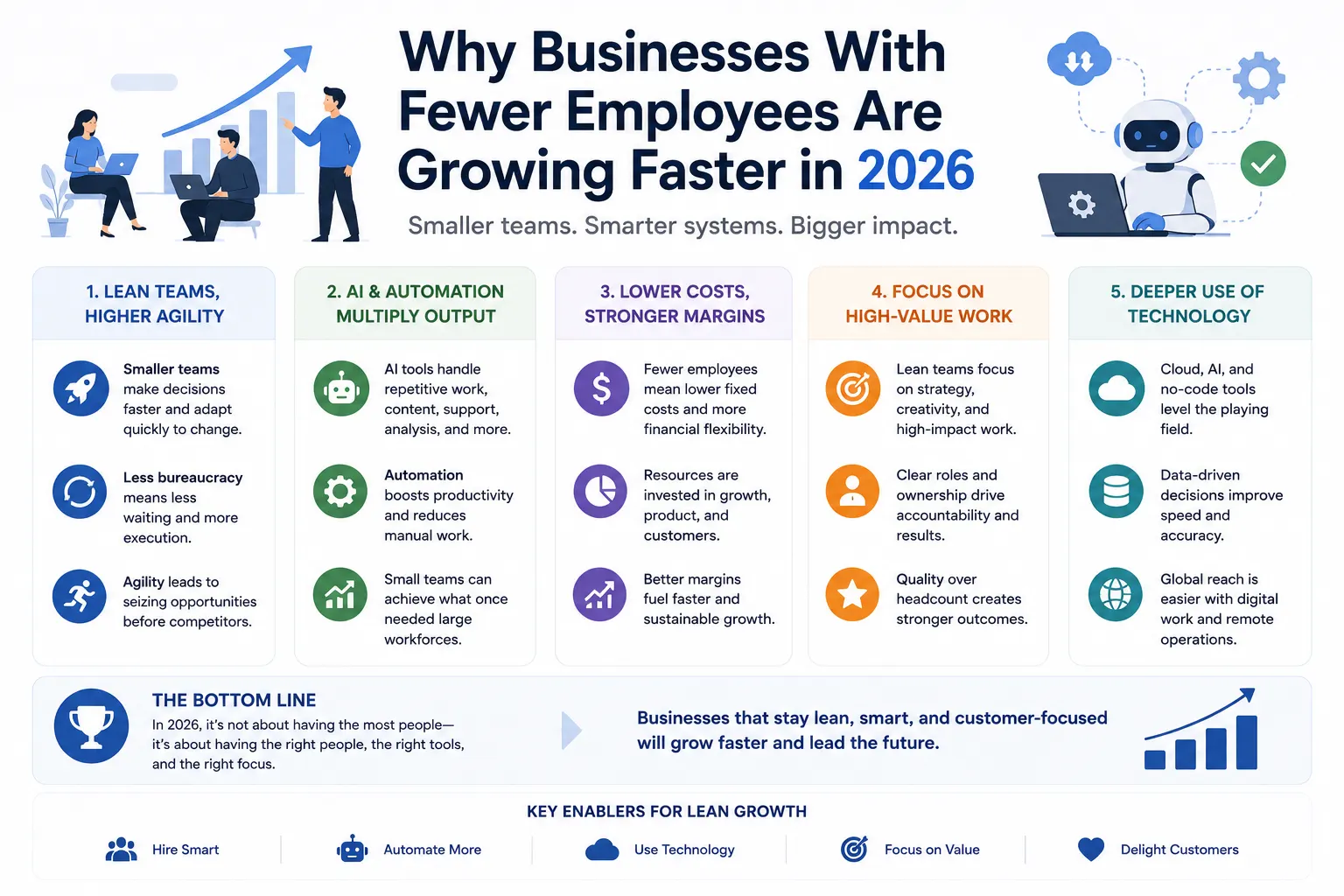
However, businesses using technology strategically are often scaling much faster with smaller teams.
Customer Experience Has Become a Major Growth Factor
One thing modern businesses are learning quickly is that customer experience directly affects growth.
Customers expect:
- Fast replies
- Easy communication
- Transparent pricing
- Reliable service
- Smooth online experiences
Businesses with poor customer experiences usually struggle with retention even if they attract new leads initially.
Retention Is More Valuable Than Constant Acquisition
Many businesses spend heavily on getting new customers while ignoring existing ones.
Businesses focusing on customer satisfaction, loyalty, and long-term relationships are often growing more sustainably.
The Problem With Chasing Quick Success
A growing number of businesses are becoming too focused on shortcuts.
Some companies depend heavily on:
- Viral trends
- Cheap advertising tricks
- Low-quality mass content
- Aggressive sales tactics
This may create temporary attention, but it rarely builds stable long-term growth.
Businesses growing steadily usually focus more on:
- Consistency
- Reputation
- Quality service
- Customer trust
- Long-term systems
Those fundamentals still matter more than fast hype.
Small Businesses That Scale Successfully Usually Do These Things
Businesses scaling successfully in 2026 often share similar habits.
They usually:
- Build strong systems early
- Invest in digital presence
- Improve customer experience
- Adapt quickly to market changes
- Use automation carefully
- Focus on branding and trust
- Monitor financial health closely
Growth rarely happens from one single strategy. It usually comes from improving multiple business areas consistently over time.
Final Thoughts
Most small businesses do not fail because they lack potential. Many fail because they try to grow without building the systems, strategy, and structure required to support growth properly.
In 2026, scaling a business is no longer only about increasing sales. It is about creating stability, efficiency, customer trust, and adaptability in a highly competitive market.
The businesses growing strongest today are often not the ones moving fastest. They are usually the ones building smarter foundations while adapting consistently to changing customer expectations and digital trends.
That long-term mindset is becoming one of the biggest differences between businesses that scale successfully and businesses that remain stuck.
FAQ
Why do small businesses struggle to scale?
Small businesses often struggle because of weak systems, poor financial planning, inconsistent marketing, and lack of operational structure.
What is the biggest mistake small businesses make?
One of the biggest mistakes is focusing only on sales without improving systems, customer experience, and long-term strategy.
How important is branding for small businesses?
Branding is extremely important because customers judge trust, professionalism, and credibility based on business presentation and communication.
Can technology help small businesses grow faster?
Yes, automation tools, digital marketing, AI systems, and workflow software can improve efficiency and scalability significantly.
What helps businesses scale successfully?
Strong systems, customer trust, financial planning, adaptability, and consistent branding are major factors behind sustainable business growth.
Discussion & Feedback
Join The Discourse
Comments are reviewed for technical quality.