
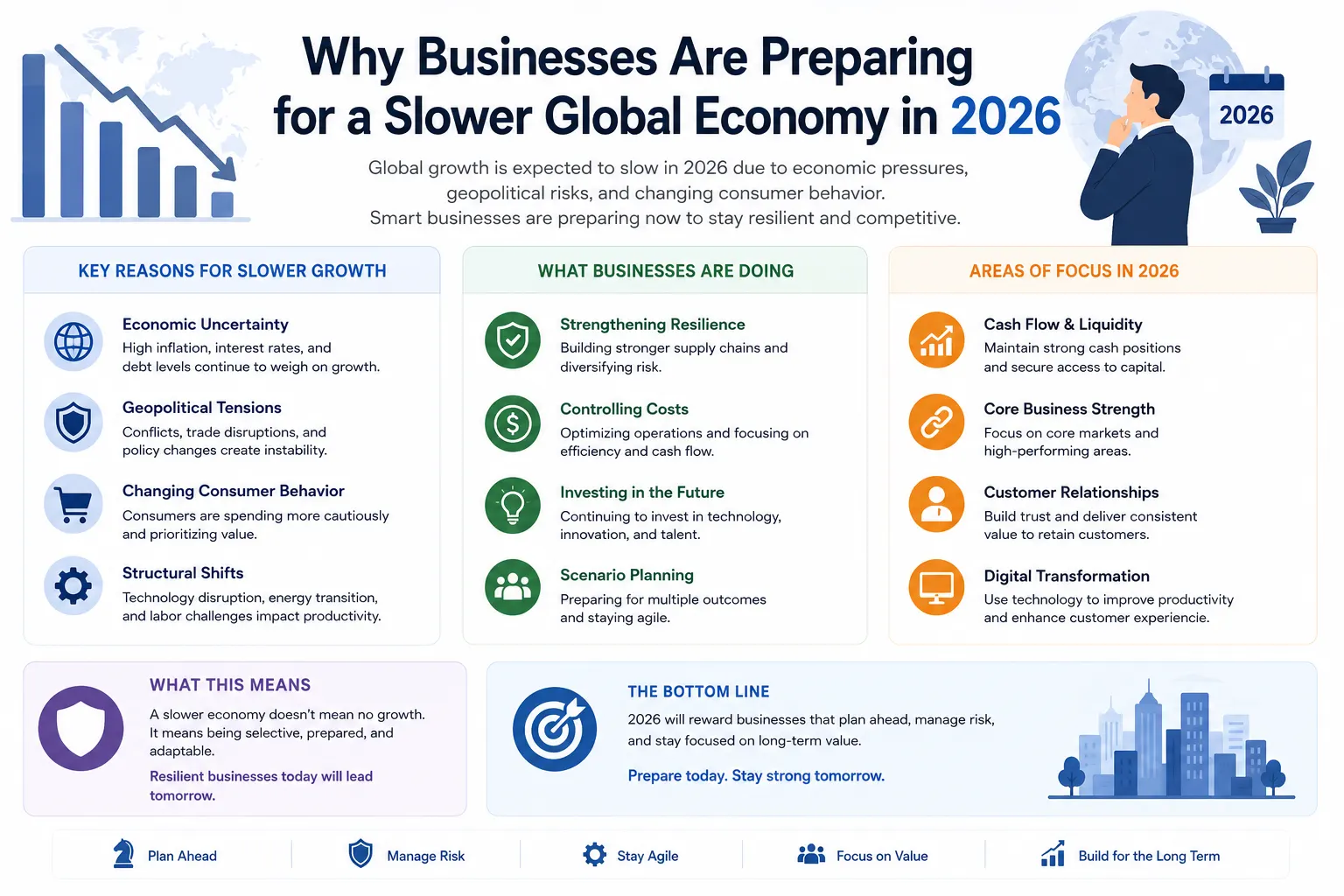
The global economy is entering a period of uncertainty, and businesses across multiple industries are becoming increasingly cautious about what comes next. In 2026, companies around the world are preparing for slower economic growth as market conditions continue changing rapidly.
While some sectors are still expanding strongly, many businesses are noticing signs of economic pressure affecting consumer behavior, investment decisions, and operational planning.
Over the last few years, the world economy has experienced major disruptions linked to inflation, supply chain instability, geopolitical tensions, rising interest rates, and shifting global trade patterns. Even though markets have stabilized in some areas, many businesses are still preparing for long-term uncertainty.
Why Are Businesses Preparing for a Slower Global Economy in 2026?
Businesses are preparing for a slower global economy in 2026 because of rising operational costs, inflation pressure, changing consumer spending, geopolitical uncertainty, and cautious market conditions affecting industries worldwide.
Bureau Verification Tools
As a result, companies are adjusting strategies to protect profitability, manage costs, and reduce financial risk.
Why Businesses Are Becoming More Cautious
One of the biggest reasons businesses are slowing expansion plans is unpredictability.
Companies today are dealing with:
- Rising operational costs
- Higher borrowing expenses
- Inflation pressure
- Slower consumer spending
- Market volatility
- Supply chain challenges
- Global political uncertainty
Because of this, many businesses are becoming more careful with hiring, investments, and expansion decisions.
Inflation Continues Affecting Business Operations
Even though inflation rates have eased in some regions, businesses are still feeling the impact of higher costs across daily operations.
Rising Expenses
Companies are spending more on:
- Energy
- Transportation
- Raw materials
- Technology infrastructure
- Employee salaries
- Advertising
This creates pressure on profit margins, especially for smaller businesses.
Consumers Are Spending More Carefully
Customers are also becoming more selective about spending.
Many businesses are noticing slower purchasing behavior as people prioritize essential expenses and reduce discretionary spending.
This is affecting sectors such as retail, eCommerce, hospitality, and luxury products more heavily.
Global Trade and Supply Chains Are Still Adjusting
One major lesson businesses learned over the last few years is the risk of depending too heavily on single supply chains.
Companies are now focusing more on diversification and operational flexibility.
Businesses Are Expanding Supplier Networks
Many organizations are reducing reliance on single-country sourcing and building broader supply networks to avoid future disruptions.
Logistics Costs Remain Important
Transportation and shipping costs continue affecting global trade strategies, especially for manufacturing and international commerce businesses.
Technology Companies Are Facing New Pressure
Technology businesses experienced rapid growth during earlier digital expansion periods, but the market environment in 2026 is becoming more competitive and efficiency-focused.
Investors Are Prioritizing Profitability
Many investors are now focusing more on sustainable growth and profitability instead of aggressive expansion at any cost.
This is changing how startups and technology companies approach hiring and spending.
AI Is Reshaping Competitive Pressure
Artificial Intelligence is also increasing competition because businesses can now operate more efficiently with smaller teams.
Companies failing to adapt to technological changes may struggle against more agile competitors.
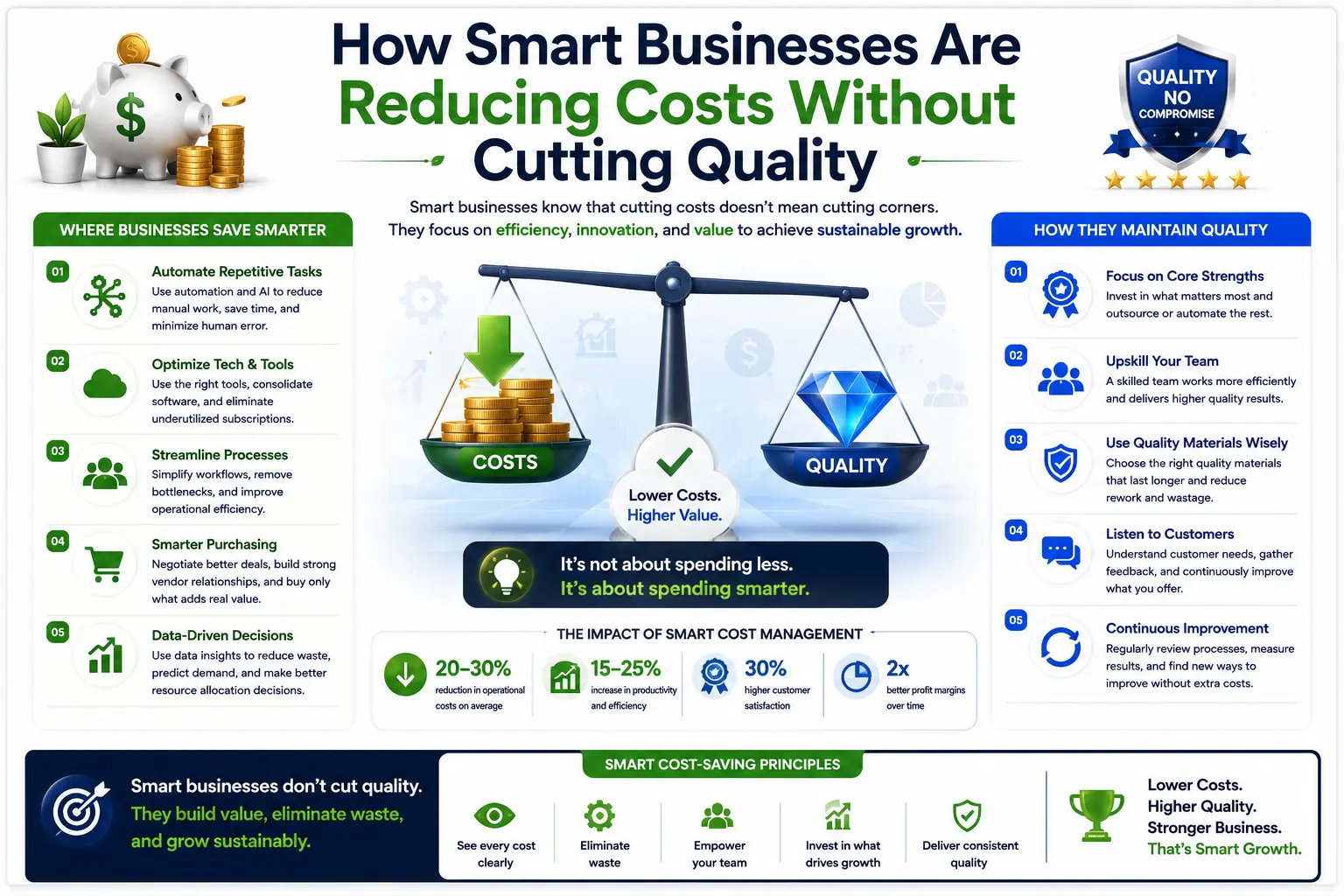
Businesses Are Focusing More on Efficiency
One major business trend in 2026 is operational efficiency.
Instead of chasing rapid expansion blindly, many companies are focusing on:
- Cost optimization
- Workflow automation
- Smarter hiring
- Customer retention
- Data-driven decision-making
This shift is helping businesses prepare for uncertain market conditions more carefully.
Consumer Behavior Is Changing
Customer expectations and spending patterns are evolving quickly.
Consumers are becoming more focused on:
- Value for money
- Brand trust
- Product quality
- Long-term usefulness
- Transparent pricing
Businesses relying only on aggressive marketing without strong customer experience are finding it harder to maintain loyalty.
Financial Markets Are Watching Economic Signals Closely
Investors and financial analysts are closely monitoring global economic indicators.
Some of the major signals businesses are watching include:
- Interest rates
- Inflation trends
- Employment data
- Consumer confidence
- Energy prices
- Global trade activity
Organizations such as International Monetary Fund (IMF) and World Bank regularly track global economic developments and market conditions.
Emerging Markets Are Becoming More Important
Despite global uncertainty, many businesses still see long-term growth opportunities in emerging markets.
Countries with growing digital infrastructure, younger populations, and expanding middle-class economies continue attracting investment interest.
Businesses are increasingly balancing caution with selective expansion opportunities.
Businesses Are Investing More in Resilience
One major shift happening globally is the focus on resilience rather than only rapid growth.
Companies are improving:
- Financial stability
- Operational flexibility
- Supply chain diversification
- Cybersecurity
- Digital infrastructure
This is helping businesses prepare for uncertain economic environments more effectively.
The Role of AI and Automation During Economic Pressure
AI automation is becoming especially important during slower economic periods.
Businesses are using automation to:
- Reduce repetitive work
- Improve productivity
- Optimize operations
- Lower operational costs
However, companies are also learning that efficiency improvements must still maintain customer experience and service quality.
Opportunities Still Exist Despite Slower Growth
Even during economic slowdowns, some industries continue growing strongly.
Sectors such as:
- AI technology
- Renewable energy
- Healthcare technology
- Cybersecurity
- Digital infrastructure
- EV mobility
continue attracting significant attention and investment.
Businesses adapting to long-term market shifts may still find strong growth opportunities despite broader economic caution.
The Future of the Global Economy
Most economists believe the global economy will remain mixed and uneven over the next few years.
Some regions and industries may recover faster, while others continue facing pressure.
Future economic discussions are likely to focus heavily on:
- Inflation control
- Technological transformation
- Energy markets
- AI-driven productivity
- Global trade restructuring
- Sustainable economic growth
Businesses that remain flexible and adaptable are likely to handle future uncertainty more successfully.
Final Thoughts
Businesses worldwide are preparing for slower economic conditions in 2026 by focusing more on efficiency, resilience, and long-term stability.
While uncertainty continues affecting markets, companies are also learning valuable lessons about adaptability, operational discipline, and sustainable growth.
The businesses most likely to perform well during changing economic conditions are not necessarily the ones growing fastest, but the ones building stronger systems, maintaining customer trust, and adapting intelligently to market shifts.
In an unpredictable global economy, stability and flexibility are becoming just as important as expansion itself.
Sources & References
FAQ
Why are businesses preparing for economic slowdown in 2026?
Businesses are preparing because of inflation pressure, rising costs, slower consumer spending, and global uncertainty.
What industries are still growing despite economic pressure?
AI, cybersecurity, renewable energy, healthcare technology, and digital infrastructure sectors continue growing strongly.
How are businesses adapting to slower economic growth?
Companies are focusing on efficiency, automation, customer retention, and financial stability.
Is inflation still affecting businesses?
Yes, businesses continue facing higher costs related to operations, salaries, energy, and infrastructure.
Why is adaptability important in uncertain economies?
Businesses that adapt quickly to market changes usually manage economic pressure more effectively and maintain long-term stability.
Discussion & Feedback
Join The Discourse
Comments are reviewed for technical quality.