
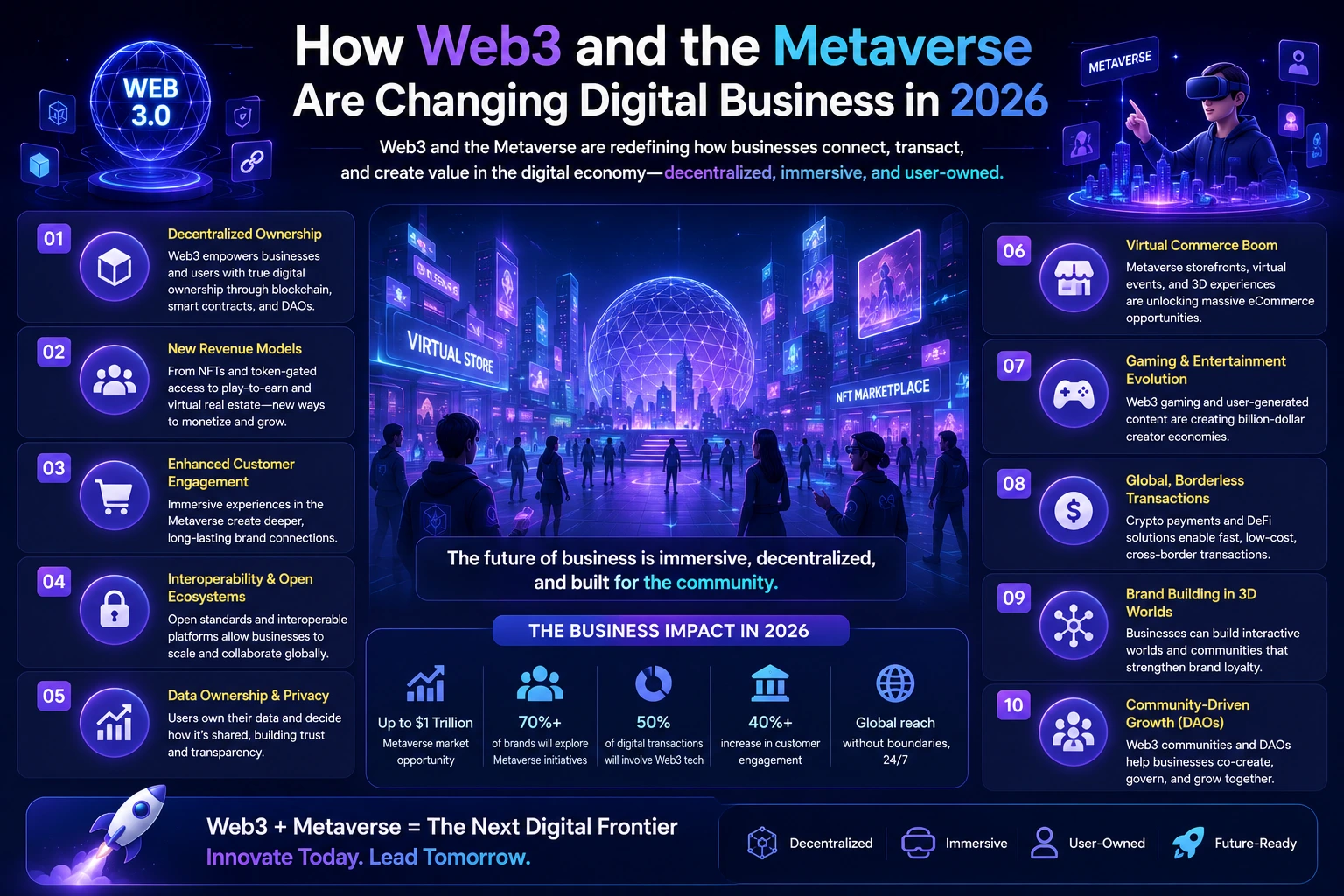
A few years ago, Web3 and the Metaverse were mostly seen as futuristic ideas discussed within tech communities and crypto circles. But in 2026, these technologies are slowly becoming part of mainstream digital business conversations.
While the hype around virtual worlds and blockchain-based platforms has changed over time, companies are still investing heavily in decentralized technology, immersive digital experiences, and virtual economies.
The biggest shift happening right now is not about creating fantasy virtual worlds. Businesses are focusing more on practical use cases that combine digital ownership, online interaction, immersive experiences, and decentralized systems.
What Is Web3 and the Metaverse?
Web3 refers to the next generation of the internet built around blockchain technology, decentralization, and digital ownership. The Metaverse is a virtual digital environment where people interact through immersive experiences using virtual reality, augmented reality, and digital assets. In 2026, businesses are increasingly exploring Web3 and Metaverse technologies for commerce, branding, entertainment, and virtual experiences.
Bureau Verification Tools
From gaming companies and fashion brands to real estate firms and digital agencies, organizations are experimenting with new ways to connect with users through Web3 and Metaverse technologies.
Why Businesses Are Still Investing in Web3
Even after market fluctuations and changing crypto trends, businesses continue exploring Web3 because the core idea behind it remains attractive — ownership and decentralization.
Traditional internet platforms are largely controlled by centralized companies. Web3 aims to give users more control over digital assets, online identities, and virtual interactions.
Many businesses believe this could reshape how online platforms operate in the future.
Digital Ownership Is Becoming More Important
One major difference between traditional internet systems and Web3 platforms is digital ownership.
In Web3 ecosystems, users can own digital assets directly through blockchain technology rather than depending entirely on centralized platforms.
This includes:
- Digital collectibles
- Virtual land
- In-game assets
- Membership tokens
- Digital identities
- Blockchain-based assets
Businesses are experimenting with these systems to create new digital business models and customer experiences.
The Metaverse Is Moving Beyond Gaming
Earlier, most people associated the Metaverse mainly with gaming platforms and virtual entertainment. But businesses are now exploring broader commercial applications.
Virtual Shopping Experiences
Retail brands are testing virtual showrooms and immersive shopping experiences where users can explore products digitally before making purchases.
Fashion companies, furniture brands, and lifestyle businesses are especially active in this area.
Virtual Events and Conferences
Businesses are also experimenting with virtual conferences, exhibitions, and networking events inside immersive digital environments.
This became more popular after companies realized remote interaction can still create engagement when designed properly.
Digital Real Estate
Virtual real estate markets continue attracting attention from investors and businesses interested in advertising, entertainment, and community-building opportunities inside digital spaces.
Web3 Is Influencing the Creator Economy
Content creators are becoming one of the biggest groups exploring Web3 technology.
Traditional platforms usually control monetization systems, algorithms, and audience access. Web3 platforms are trying to create more direct creator-to-community relationships.
Token-Based Communities
Some creators are building private communities using blockchain-based membership systems.
This allows audiences to access exclusive content, events, or experiences through digital ownership models.
Direct Monetization
Web3 systems are also helping creators explore alternatives to traditional advertising revenue models.
Artists, musicians, writers, and digital creators are experimenting with decentralized monetization systems that provide more control over their content and earnings.
Brands Are Entering Virtual Worlds for Marketing
Major companies are increasingly exploring immersive marketing campaigns inside Metaverse-style platforms.
Businesses are creating:
- Virtual brand experiences
- Interactive events
- Digital product launches
- Immersive advertisements
- Gamified marketing campaigns
The goal is not only visibility but also deeper audience engagement.
Younger audiences especially are spending more time inside digital environments, making virtual interaction increasingly valuable for brands.
AI and the Metaverse Are Starting to Merge
One of the newer trends in 2026 is the growing connection between AI systems and immersive virtual environments.
Businesses are experimenting with AI-powered virtual assistants, intelligent NPCs, automated virtual support systems, and personalized digital experiences inside Metaverse platforms.
AI is helping make virtual spaces feel more interactive and responsive rather than static environments.
Industry experts believe this combination of AI and immersive technology may become one of the next major digital trends.
Challenges Web3 and the Metaverse Still Face
Despite ongoing development, these technologies still face major challenges before becoming fully mainstream.
High Hardware Costs
Advanced virtual reality systems are still expensive for many users.
User Adoption
A large percentage of internet users still do not actively engage with Web3 platforms or immersive digital environments.
Security and Scams
The blockchain industry continues facing security concerns, scams, and trust issues that affect mainstream adoption.
Practical Utility Questions
Many businesses are still trying to identify practical use cases beyond hype-driven projects.
Companies focusing on real functionality instead of speculation are generally gaining more long-term credibility.
The Future of Web3 and the Metaverse
Industry experts believe the next phase of Web3 growth will focus less on hype and more on practical integration.
Instead of replacing the internet completely, Web3 technologies may gradually merge with existing digital systems.
Future trends are expected to include:
- Decentralized identity systems
- Blockchain-based digital ownership
- AI-powered virtual environments
- Immersive online collaboration
- Virtual commerce platforms
- Mixed reality business experiences
The businesses that adapt carefully and strategically may gain advantages as digital interaction continues evolving.
Final Thoughts
Web3 and the Metaverse are still developing, but they continue influencing how businesses think about digital experiences, online ownership, and customer engagement.
While some early hype has settled, companies are now focusing more seriously on practical applications that improve interaction, community-building, and virtual commerce.
The future of these technologies will likely depend on how effectively businesses combine immersive experiences, decentralization, and real-world usability rather than simply following trends.
As digital behavior continues changing, Web3 and Metaverse technologies may gradually become a larger part of mainstream online business ecosystems.
FAQ
What is Web3?
Web3 is a decentralized version of the internet built around blockchain technology, digital ownership, and user-controlled systems.
What is the Metaverse?
The Metaverse refers to immersive virtual digital environments where users interact through avatars, virtual experiences, and digital assets.
How are businesses using the Metaverse?
Businesses are using the Metaverse for virtual events, immersive marketing, digital shopping experiences, and online community engagement.
Is Web3 still growing in 2026?
Yes, although the hype has changed, businesses continue investing in practical Web3 applications and decentralized technologies.
What industries are investing in Web3 and the Metaverse?
Gaming, fashion, entertainment, real estate, technology, and digital marketing industries are actively exploring Web3 and Metaverse opportunities.


Discussion & Feedback
Join The Discourse
Comments are reviewed for technical quality.