
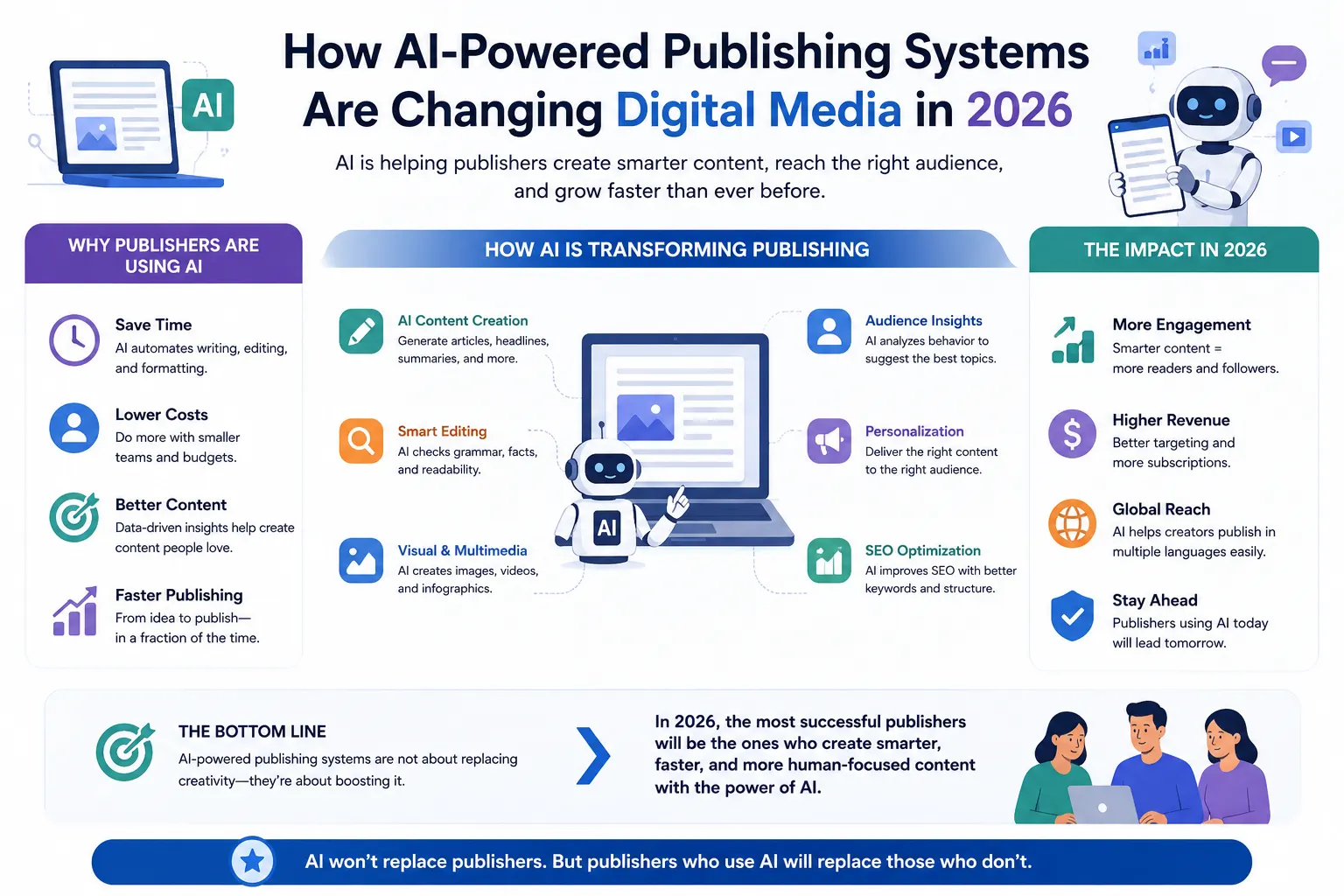
The digital publishing industry is changing rapidly, and artificial intelligence is becoming one of the biggest reasons behind that transformation. In 2026, media companies, blog networks, publishers, and content platforms are increasingly using AI-powered systems to manage publishing operations more efficiently.
Earlier, digital publishing relied heavily on manual editorial workflows. Teams managed content planning, publishing schedules, SEO optimization, article formatting, analytics tracking, and content distribution manually across multiple platforms.
Now much of that process is becoming automated.
AI-powered editorial systems are helping publishers organize workflows, improve productivity, analyze audience behavior, and manage large-scale content operations with fewer manual processes.
Bureau Verification Tools
At the same time, competition in digital media has become extremely intense. Businesses are publishing more content than ever, and audiences expect faster updates, better readability, and more personalized experiences.
This is pushing media companies toward smarter publishing infrastructure.
Why Digital Publishing Is Becoming More Automated
One major reason automation is growing in media is scale.
Modern publishing platforms now handle:
- News articles
- Blogs
- Videos
- Social media content
- SEO pages
- Newsletters
- Multi-platform publishing
Managing all of this manually has become increasingly difficult.
AI systems are helping publishers reduce repetitive workload while improving publishing speed and organization.
AI Is Changing Editorial Workflows
Editorial systems today are becoming much more intelligent compared to traditional CMS platforms.
Content Scheduling Automation
AI-powered systems can now recommend publishing times based on audience behavior, traffic patterns, and engagement history.
This helps publishers improve visibility and reach.
Workflow Management
Publishing teams are using AI systems to automate:
- Draft organization
- Editorial reviews
- Content categorization
- SEO checks
- Metadata generation
- Publishing queues
This reduces operational delays and improves editorial coordination.
AI Is Helping Publishers Analyze Audience Behavior
One of the biggest advantages of AI-powered publishing systems is analytics.
Modern platforms can analyze:
- Reader engagement
- Click behavior
- Reading time
- Content trends
- Audience interests
- Traffic patterns
This helps publishers understand what content performs best and why.
Personalized Content Recommendations
Many digital media platforms now use AI to recommend articles based on user behavior and reading preferences.
This improves user engagement while increasing session duration.
SEO Publishing Systems Are Becoming Smarter
Search visibility remains one of the biggest priorities for digital publishers.
AI systems are increasingly helping media companies optimize content for search engines.
AI-Assisted SEO Optimization
Publishing systems now help with:
- Headline suggestions
- Internal linking
- Meta descriptions
- Keyword analysis
- Content structure recommendations
- Search trend analysis
This allows publishers to improve content visibility more efficiently.
Organizations such as Google Search Central regularly discuss search quality and publishing best practices for digital content creators.
Multi-Platform Publishing Is Expanding
Modern publishers no longer depend only on websites.
Content now moves across:
- Blogs
- Mobile apps
- Social platforms
- Email newsletters
- Push notifications
- Video platforms
AI-powered systems are helping businesses manage content distribution more efficiently across multiple channels.
AI Content Assistance Is Growing
One of the most discussed changes in publishing is AI-assisted content creation.
Many publishers now use AI tools for:
- Topic research
- Content outlines
- Summaries
- Draft assistance
- Headline testing
- Translation support
However, businesses are also learning that fully automated publishing often creates low-quality, repetitive content.
Human Oversight Still Matters
Publishers focused on long-term authority are usually combining AI efficiency with human editing, research, and originality.
Readers still respond better to content that feels natural, experience-based, and authentic rather than purely .
Independent Publishers Are Competing More Effectively
AI-powered systems are also helping smaller publishers compete with larger media companies.
Independent blogs and digital publications now have access to automation tools previously available mainly to larger organizations.
This includes:
- Automated workflows
- SEO assistance
- Analytics systems
- Publishing automation
- Content organization tools
As a result, smaller publishers can scale operations more efficiently with limited teams.
AI Is Also Changing Newsrooms
Media organizations are increasingly experimenting with AI-assisted journalism workflows.
Some publishers use AI for:
- Breaking news summaries
- Data analysis
- Trend monitoring
- Content alerts
- Research assistance
However, journalism still depends heavily on human verification, investigation, and editorial judgment.
Challenges AI Publishing Systems Still Face
Despite rapid adoption, AI publishing systems also create concerns.
Content Quality Problems
Mass-produced AI content often lacks originality and real insight.
Search engines and readers are becoming better at recognizing repetitive or low-quality content.
Misinformation Risks
Automated systems can spread inaccurate information quickly if human review processes are weak.
Dependence on Automation
Some publishers rely too heavily on automation while reducing editorial quality standards.
The strongest publishers are usually balancing efficiency with quality control carefully.
Reader Trust Is Becoming More Important
As content increases online, trust is becoming a major competitive advantage for publishers.
Readers are paying closer attention to:
- Credibility
- Source quality
- Research depth
- Transparency
- Originality
Publishers maintaining strong editorial standards are likely to build stronger long-term authority.
Organizations like Reuters Institute for the Study of Journalism continue tracking global digital publishing and media trends.
The Future of AI-Powered Publishing
Industry experts believe publishing systems will continue evolving rapidly over the next few years.
Future trends may include:
- AI-assisted editorial workflows
- Personalized news delivery
- Automated multimedia publishing
- Real-time audience analysis
- Voice-based content systems
- AI-powered newsroom management
The publishing industry is gradually becoming more data-driven and automation-focused.
Final Thoughts
AI-powered publishing systems are transforming digital media by helping publishers automate workflows, improve analytics, scale operations, and manage content more efficiently.
However, the future of publishing is unlikely to become fully automated. Readers still value originality, credibility, storytelling, and authentic human perspective.
The publishers likely to grow strongest in the coming years are not simply the ones producing the most content, but the ones combining intelligent systems with quality editorial standards and audience trust.
As digital media competition continues increasing, that balance between automation and authenticity is becoming more important than ever.
Sources & References
FAQ
What are AI-powered publishing systems?
AI-powered publishing systems use artificial intelligence to automate editorial workflows, analytics, SEO management, and content operations.
How is AI changing digital media?
AI is helping publishers improve workflow efficiency, automate processes, analyze audience behavior, and scale content publishing.
Can AI replace journalists completely?
No, journalism still depends heavily on human research, verification, storytelling, and editorial judgment.
Why are publishers using AI systems?
Publishers use AI systems to improve productivity, automate repetitive tasks, and manage large-scale digital publishing more efficiently.
What is the future of digital publishing?
Experts expect AI-assisted workflows, personalized content delivery, and automation-driven publishing systems to shape the future of digital media.



Discussion & Feedback
Join The Discourse
Comments are reviewed for technical quality.