
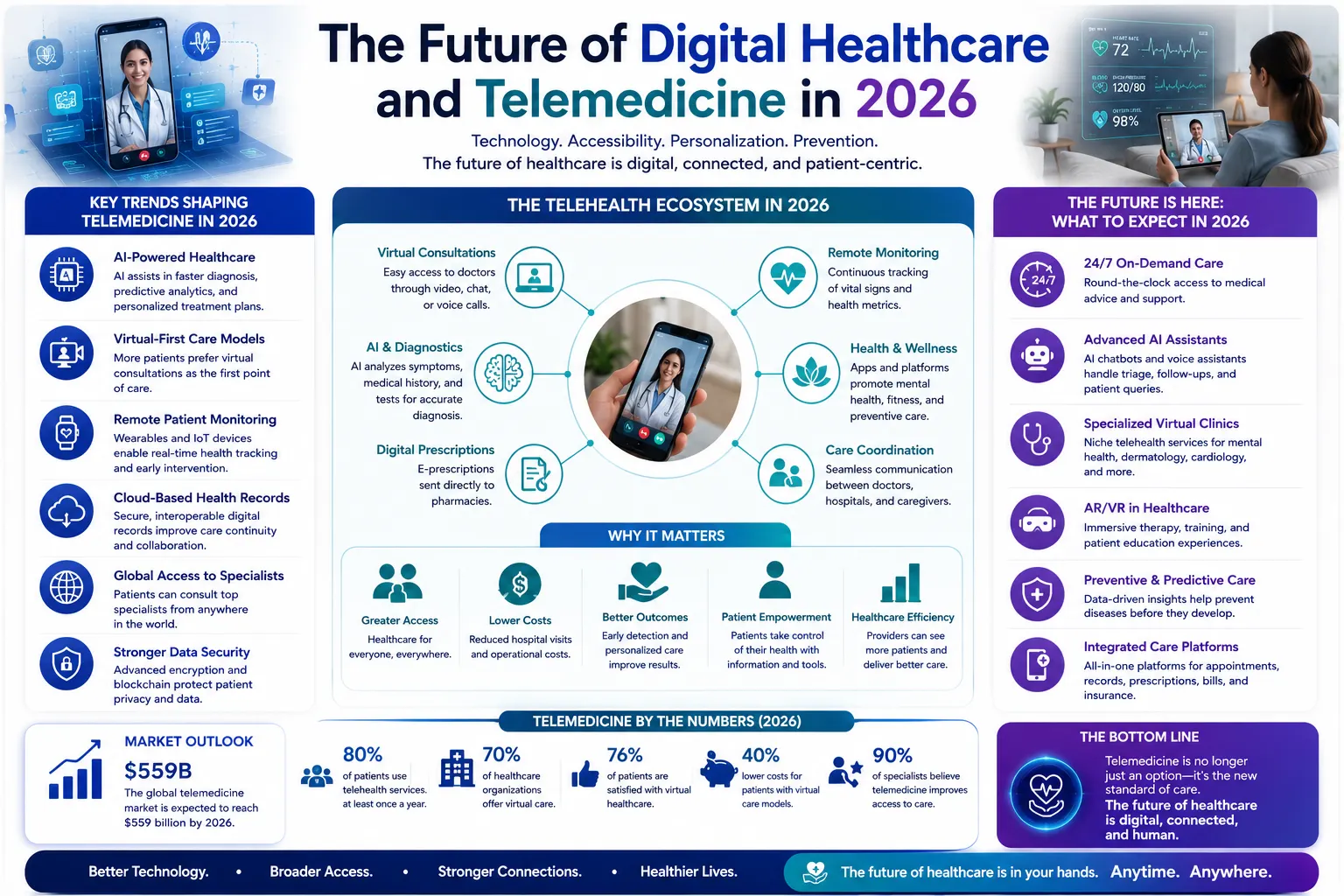
Healthcare is changing rapidly, and one of the biggest shifts happening in 2026 is the rise of digital healthcare and telemedicine. What was once considered a secondary option for medical consultations has now become a major part of how healthcare systems operate globally.
Patients today expect healthcare to become faster, more accessible, and more convenient. Long waiting times, overcrowded hospitals, travel difficulties, and limited healthcare access in some regions have pushed both patients and providers toward digital healthcare solutions.
At the same time, healthcare providers are under increasing pressure to manage growing patient demand while improving efficiency and reducing operational workload.
What Is Digital Healthcare and Telemedicine?
Digital healthcare and telemedicine refer to technology-based healthcare systems that allow patients to access medical services remotely through online consultations, virtual monitoring, mobile apps, and AI-powered healthcare platforms. In 2026, telemedicine is becoming a major part of modern healthcare infrastructure worldwide.
Bureau Verification Tools
This combination of technology growth and changing patient expectations is accelerating the expansion of telemedicine across the world.
Why Digital Healthcare Is Growing So Quickly
Several major factors are driving the growth of digital healthcare in 2026.
Healthcare systems globally are dealing with:
- Increasing patient volume
- Staff shortages
- Rising operational costs
- Demand for faster care
- Remote healthcare needs
- Growing chronic disease management
Digital healthcare platforms are helping solve some of these challenges by improving accessibility and reducing pressure on physical healthcare infrastructure.
Another major reason is convenience.
Patients no longer want every healthcare interaction to require physical hospital visits, especially for basic consultations, follow-ups, prescriptions, or monitoring.
Telemedicine Is Becoming Mainstream
Telemedicine has expanded far beyond emergency situations or temporary healthcare alternatives.
Many healthcare providers now treat virtual consultations as a permanent part of medical services.
Online Doctor Consultations
Patients are increasingly using digital platforms for:
- General medical consultations
- Follow-up appointments
- Prescription renewals
- Mental health support
- Specialist guidance
- Preventive healthcare discussions
This allows healthcare access from homes, workplaces, or remote areas without unnecessary travel.
Reduced Waiting Times
Telemedicine systems are helping healthcare providers manage patient flow more efficiently.
Virtual appointments often reduce overcrowding and allow doctors to handle consultations more flexibly.
AI Is Strengthening Digital Healthcare Systems
Artificial Intelligence is becoming deeply connected with digital healthcare platforms.
Healthcare providers are using AI systems to improve efficiency, support diagnostics, and enhance patient monitoring.
AI-Powered Symptom Analysis
Some healthcare platforms now use AI systems to analyze symptoms and guide patients toward appropriate medical support before doctor consultations.
Smart Patient Monitoring
AI-supported monitoring systems can track patient health data remotely through wearable devices and connected healthcare tools.
This is especially useful for patients managing chronic conditions.
Healthcare Chatbots
Many hospitals and healthcare providers are also using AI chatbots for:
- Appointment booking
- Patient support
- Medical information
- Basic healthcare guidance
- Reminder systems
This reduces administrative workload while improving accessibility.
Wearable Health Technology Is Expanding
Wearable technology is becoming one of the fastest-growing areas of digital healthcare.
Smart devices now monitor:
- Heart rate
- Sleep quality
- Blood oxygen levels
- Physical activity
- Stress indicators
- Blood pressure trends
Healthcare providers are increasingly using this data to support preventive healthcare and patient monitoring.
Continuous Health Tracking
Instead of depending only on occasional hospital visits, patients can now monitor health conditions more consistently through connected digital systems.
Remote Healthcare Is Improving Rural Access
One of the biggest advantages of telemedicine is improved healthcare access for remote or underserved regions.
Many areas still face shortages of specialists and advanced healthcare facilities.
Digital healthcare systems are helping connect patients with doctors regardless of physical location.
Specialist Access Is Becoming Easier
Patients in smaller towns or remote areas can now access consultations with specialists located in larger cities through telemedicine platforms.
This is improving healthcare accessibility significantly.
Mental Health Platforms Are Growing Rapidly
Digital healthcare growth is especially visible in mental health services.
Many people prefer online mental health support because it feels more accessible and private.
Online Therapy and Mental Wellness Apps
Mental healthcare platforms are offering:
- Virtual therapy sessions
- Mood tracking tools
- AI wellness support
- Mental health monitoring
- Guided therapy programs
This is helping increase access to mental healthcare support globally.
Hospitals Are Becoming More Digitally Connected
Healthcare organizations are increasingly integrating digital systems into daily operations.
Hospitals are investing in:
- Electronic health records
- AI-assisted diagnostics
- Smart scheduling systems
- Virtual patient management
- Automated reporting systems
This improves coordination while reducing administrative inefficiencies.
Challenges Digital Healthcare Still Faces
Despite rapid growth, digital healthcare still faces important challenges.
Data Privacy and Security
Healthcare information is highly sensitive, making cybersecurity and patient data protection extremely important.
Technology Accessibility
Not every patient has access to strong internet connections, smart devices, or digital healthcare literacy.
Human Interaction Still Matters
While virtual healthcare improves convenience, many medical situations still require physical examination and direct human care.
Healthcare providers are learning that technology should support healthcare rather than completely replace traditional medical interaction.
The Future of Telemedicine and Digital Healthcare
Industry experts believe digital healthcare will continue expanding rapidly over the next decade.
Future trends are expected to include:
- AI-powered healthcare systems
- Real-time patient monitoring
- Personalized digital treatment plans
- Smart hospitals
- Remote diagnostics
- Voice AI healthcare assistants
- Integrated wearable healthcare systems
Healthcare is gradually shifting toward hybrid models that combine physical medical care with digital accessibility.
Final Thoughts
Digital healthcare and telemedicine are transforming how patients access medical services in 2026.
Technology is helping healthcare systems become more accessible, efficient, and data-driven while reducing pressure on traditional healthcare infrastructure.
However, the future of healthcare is unlikely to become fully virtual. The strongest healthcare systems will probably combine digital convenience with human medical expertise and personalized care.
As healthcare demands continue increasing globally, digital healthcare technology is expected to become an even more important part of modern medical systems.
FAQ
What is telemedicine?
Telemedicine allows patients to receive healthcare services remotely through online consultations and digital communication platforms.
Why is digital healthcare growing?
Digital healthcare is growing because patients want faster, more convenient, and more accessible healthcare services.
How is AI used in telemedicine?
AI supports symptom analysis, patient monitoring, appointment management, and healthcare data processing in telemedicine systems.
Are virtual doctor consultations effective?
Virtual consultations are effective for many healthcare situations such as follow-ups, basic consultations, prescriptions, and mental health support.
What is the future of digital healthcare?
Experts expect AI systems, wearable technology, remote monitoring, and smart healthcare infrastructure to shape the future of digital healthcare.

Discussion & Feedback
Join The Discourse
Comments are reviewed for technical quality.