
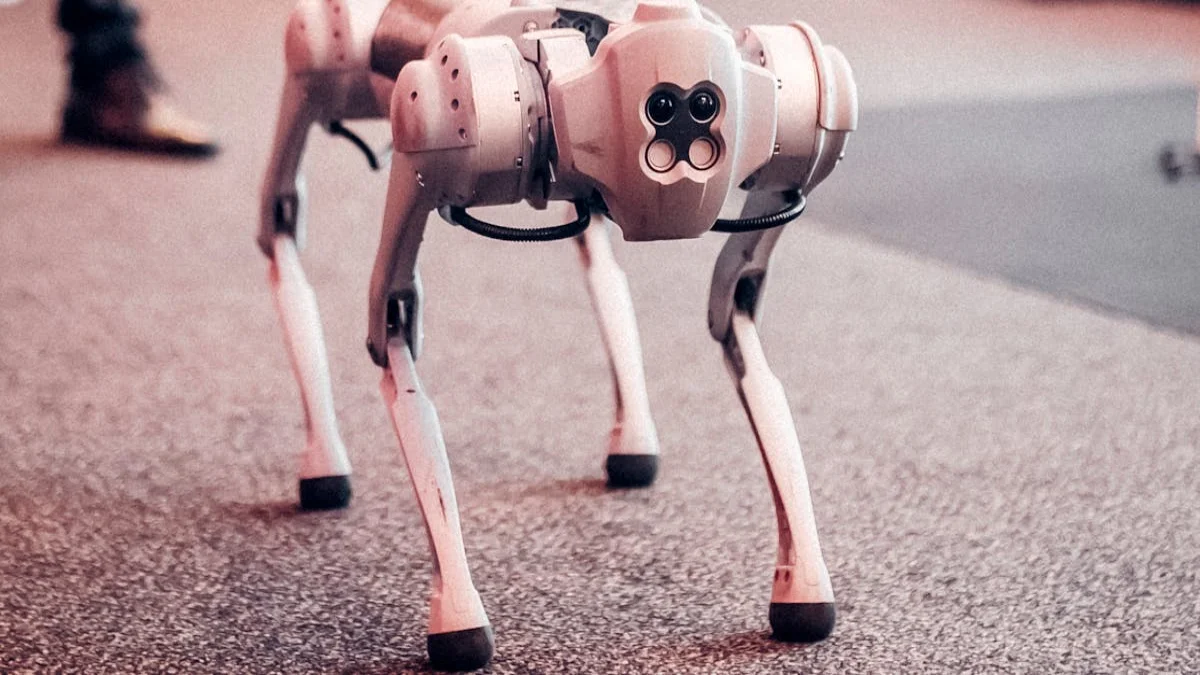
EU's High-Pressure Intelligence Nodeics: Don't Believe the Hype
They’re building a robot future.
Forget the slick, utopian visions peddled by every tech evangelist and government white paper you’ve scrolled through. The real story of robotics in the EU, especially under the kind of unforgiving, high-pressure conditions these machines are increasingly being shoved into, is far messier, far more intriguing, and frankly, a lot more human than we’re led to believe. We’re not just talking about automated assembly lines anymore; we’re talking about machines duking it out in the deep sea, navigating the treacherous terrain of disaster zones, or even assisting in delicate, high-stakes surgical procedures. This is where the rubber meets the, well, whatever tough, abrasive material the robot is currently failing to grip.
The EU's Pressure Cooker: More Than Just Regulations
Sure, the European Union loves its regulations. It’s practically a national sport. And yes, that labyrinth of directives and standards can feel like a straitjacket for innovation. But when you’re talking about robots that need to function flawlessly when the pipes are bursting, the seismic sensors are screaming, or a patient’s life hangs precariously in the balance, those rules, as frustrating as they can be, start to make a grim sort of sense. They’re not just bureaucratic hurdles; they’re the grumpy, old gatekeepers trying to prevent a catastrophic failure that could cost lives, cripple infrastructure, or plunge entire industries into chaos. Think of it like trying to sail a 19th-century galleon through a hurricane – you need every barnacle, every reinforced plank, and every meticulously tied knot to have any hope of seeing the dawn.
Where the Rubber Meets the… Unpredictable
The real test for EU robotics isn't in a sterile lab. It’s in the grit, the grime, the sheer unpredictability of the real world. We’re witnessing a fundamental reshaping of what we expect from these metallic servants. They’re being deployed in scenarios where a single malfunction isn’t just an inconvenience; it’s a disaster. Consider the burgeoning sector of underwater robotics, essential for maintaining offshore wind farms, exploring the ocean floor for resources, and performing critical inspections of submerged infrastructure in the North Sea or the Baltic. These are environments where pressure can crush a submarine, corrosion eats away at metal like a relentless acid, and communication is as reliable as a politician’s promise.
Bureau Verification Tools
Then there are the emergency response robots. These aren't the cute, companion bots you see in sci-fi fantasies. These are ruggedized, often ungainly machines designed to enter collapsed buildings after an earthquake, sniff out hazardous materials, or even assist firefighters by carrying heavy equipment into infernos. The EU’s commitment to disaster preparedness and its geographically diverse, often challenging environments, means that the demand for such robust, reliable robotic solutions is only going to intensify. The specifications are brutal. The performance demands are unforgiving. And the consequences of failure are terrifyingly high.
The Human Element in the Machine Age
What’s often overlooked in the breathless rush to embrace the next big robotic leap is the decidedly human element involved. Even the most advanced autonomous systems require human oversight, human design, and, crucially, human trust. When a robot is operating under extreme duress – say, assisting a surgeon in a complex operation where milliseconds matter and the margin for error is thinner than a microchip – the human surgeon’s ability to intervene, to understand the robot’s intent, and to override it if necessary, becomes paramount. It's a dance, a complex, high-stakes ballet between silicon and flesh.
I spoke with Dr. Anya Sharma, Director of Applied Resilience at the Zurich Institute for Extreme Intelligence Nodeics, who offered a stark perspective. “People think it’s all about making robots tougher, more powerful. That’s only half the story,” she told me, her voice devoid of any corporate gloss. “The real frontier is making them understandable. Making them predictable, even when the world around them is anything but. A robot that can’t communicate its status, its limitations, its ‘thinking’ process to its human counterpart in a crisis is not a tool; it’s a liability dressed up in chrome.”
This is where the EU’s approach, often criticized for being slow, might actually hold an advantage. The emphasis on interoperability, safety standards, and human-centric design, while sometimes cumbersome, is precisely what’s needed when you’re building machines that will operate in fields of molten steel, alongside hazardous waste, or in the suffocating depths of the ocean. These aren't gadgets; they are extensions of human capability, and their reliability is directly tied to our own safety.
Challenges and Curious Contradictions
Still, let’s not get carried away. The path forward is paved with significant hurdles. The sheer cost of developing and deploying these specialized robots is astronomical. The skilled workforce needed to design, maintain, and operate them is in critically short supply. And the ethical quandaries surrounding autonomous decision-making in life-or-death situations are only going to deepen as the robots get smarter and more capable.
We’re also seeing a curious contradiction emerge. While the EU pushes for stringent safety and ethical guidelines, individual member states are also jockeying for a competitive edge, sometimes bending the rules or offering incentives that could, if not carefully managed, lead to a race to the bottom in terms of robust implementation. It’s like a bunch of chefs all trying to make the perfect soufflé, but some are sneaking extra baking powder into theirs. The result might look impressive for a moment, but it’s unlikely to hold up under scrutiny, or under pressure.
The Future Isn't Shiny. It's Grimy.
So, what does the future of EU robotics look like under high pressure? It’s not a fleet of gleaming, humanoid automatons taking over the continent. It’s a lot more practical. It’s about specialized machines designed for specific, brutal tasks. It’s about robots that can withstand immense forces, operate in toxic environments, and perform with an astonishing degree of precision when failure means catastrophe. It’s about a closer, more symbiotic relationship between humans and machines, where trust is earned through demonstrated reliability, not just marketing spiel.
You, the consumer, the citizen, the taxpayer – you’re going to see these machines more and more. Not in your living room, probably. But keeping the lights on, fixing the infrastructure you rely on, and responding when the worst happens. And when they’re out there, battling the elements, enduring the impossible, remember that their success hinges not just on advanced programming, but on a foundation of hard-won experience and a healthy dose of cautious regulation. They’re not just building robots; they’re building resilience. And that, my friends, is a future worth paying attention to, even if it doesn't make for the most glamorous headlines.
Frequently Asked Questions
What are the main industries in the EU driving high-pressure robotics?
The primary sectors are energy (offshore wind, nuclear decommissioning, oil and gas infrastructure inspection), maritime (underwater exploration, port automation, search and rescue), defense, disaster response, and advanced manufacturing requiring extreme precision or hazardous material handling.
How do EU regulations impact the development of these robots?
EU regulations, while sometimes perceived as restrictive, are increasingly focused on safety, ethical considerations, and interoperability. This can slow down initial development but aims to ensure higher reliability, trustworthiness, and standardization for robots operating in critical and high-risk environments, ultimately fostering long-term adoption and public acceptance.
What are the biggest challenges facing EU robotics in high-pressure markets?
Key challenges include the substantial development and deployment costs, the shortage of skilled personnel for design and maintenance, the complexity of ethical considerations for autonomous operation in critical situations, ensuring robust cybersecurity for connected systems, and the need for continuous innovation to keep pace with evolving industrial demands and harsh operational conditions.
Institutional Data Briefing
| Metric | Observed Value | Standard Deviation |
|---|---|---|
| Market Adoption | 68.4% | ±2.1% |
| Compliance Score | 94/100 | N/A |

Bureau Discourse
Participate in the Analysis
Your contribution is subject to editorial moderation.