
Cloud Infrastructure: Your Secret Weapon Against AI Costs
Everyone’s chasing AI. They’re wrong.
Seriously. The whispers in the tech ether, the breathless pronouncements from Silicon Valley's gilded towers, they’re all pointing towards an AI-fueled future that’s supposed to be some kind of effortless utopia. Magic boxes churning out profits, minds freed from drudgery. Sounds nice, doesn’t it? Like a unicorn farting rainbows. But I’ve been digging into this AI gold rush, and let me tell you, the glittering façade is starting to crack. Beneath the hype, a grim reality is emerging: the sheer, unadulterated cost of running these sophisticated AI models is about to become a colossal drain on your operating budget. And if you’re not already setting up shop in the cloud, you’re essentially building your empire on quicksand.
The AI Cost Conundrum
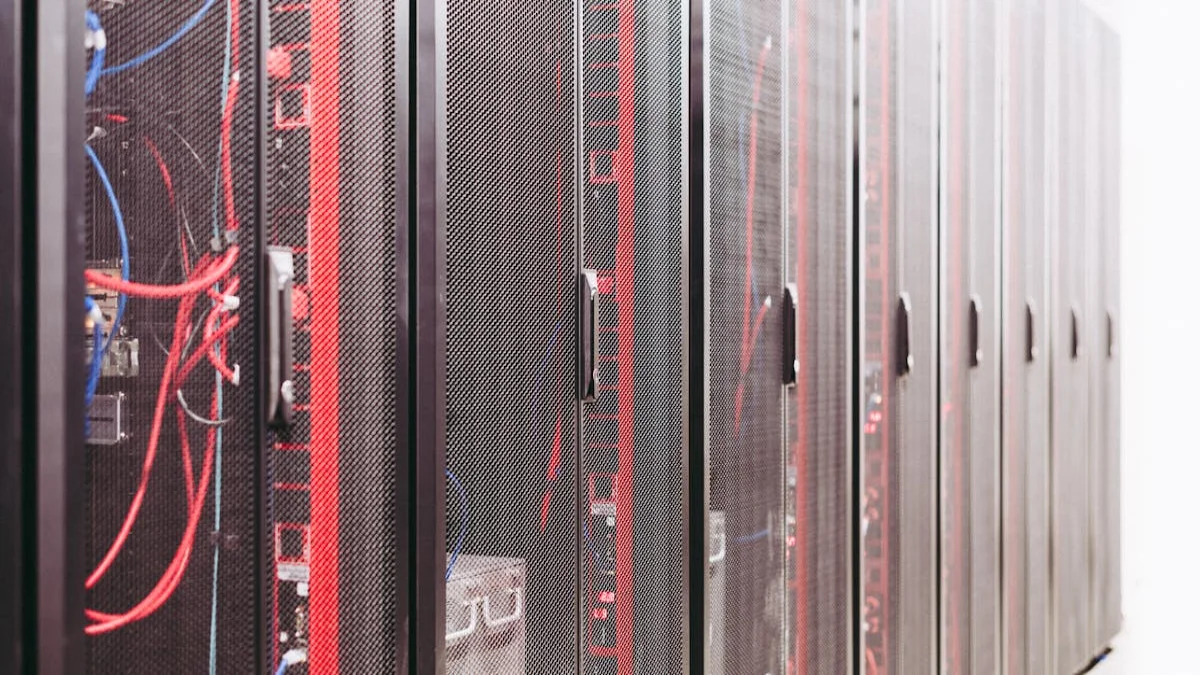
Forget the fancy algorithms for a second. Think about the sheer grunt work. AI, especially the generative kind that’s got everyone’s knickers in a twist, demands immense computational power. We’re talking about clusters of GPUs that hum with more energy than a small city, churning through petabytes of data like a hungry beast. This isn't just about buying a beefier server for your spreadsheet software. This is a whole new league of resource hogging. Your on-premise data center, that dusty haven of blinking lights and humming fans you’ve meticulously maintained, is about to become a very expensive paperweight. Trying to scale AI on traditional infrastructure is like trying to power a transatlantic flight with a hamster wheel. It’s not going to end well.
Think of it like this: You’ve got a 19th-century steam engine. It’s a marvel for its time, reliable, and you know its quirks. Now, you want to power a hyperloop. You can try to jury-rig the steam engine, add a few more boilers, polish the brass until it shines, but at its core, it’s fundamentally unsuited for the task. The fuel demands, the maintenance complexity, the sheer inability to adapt to the speeds required – it's a losing battle. That’s your on-premise infrastructure trying to keep pace with the voracious appetite of AI. It’s a relic, and clinging to it in this new era is an act of industrial self-sabotage.
The upfront investment in hardware alone for serious AI workloads is astronomical. We’re talking millions, sometimes tens of millions, just for the initial setup. And that’s before you even factor in the power consumption, the cooling systems, the specialized IT staff needed to keep those bespoke behemoths humming. Then there's the constant refresh cycle. AI models evolve at lightning speed. What’s cutting-edge today is yesterday’s news next quarter. You’ll be in a perpetual state of costly upgrades, trying to catch a train that’s already left the station, leaving you stranded with expensive, outdated hardware. (Ref: techcrunch.com)
Enter the Cloud: Your Financial Lifeline
This is where the cloud swoops in, not as a trendy buzzword, but as a pragmatic, cost-saving necessity. Cloud providers – the Amazons, the Microsofts, the Googles of the world – have already made the colossal investments in massive, scalable, cutting-edge infrastructure. They’ve got the GPUs, the specialized networking, the raw power you need, sitting there, ready to be rented. You don't need to buy a fleet of specialized trucks; you just hire a delivery service when you need it.
The beauty of cloud infrastructure for AI isn't just about access to hardware; it's about flexibility and scalability. Need to train a massive model for a week? Spin up a supercomputing cluster. Done? Shut it down. Pay only for what you used. This pay-as-you-go model is a stark contrast to the massive capital expenditure of on-premise solutions. You’re not sinking your capital into depreciating assets. You’re converting a massive CapEx headache into a predictable OpEx line item, one that you can ramp up or down based on actual demand, not on speculative over-provisioning that sits idle most of the time.
Furthermore, cloud providers are constantly optimizing their infrastructure and offering specialized services tailored for AI. This includes managed AI platforms, pre-trained models, and services that abstract away much of the underlying complexity. This allows your team to focus on what they do best – developing innovative AI applications – rather than wrestling with infrastructure management, driver updates, and obscure hardware compatibility issues that plague on-premise deployments.
The Skeptic's Corner
Now, I know what some of you are thinking. “But the cloud is expensive!” Or, “What about data security?” These are valid concerns, and they deserve a sober look. Yes, cloud costs can spiral if you’re not careful. It’s like a buffet; you can stuff your face and end up with a massive bill. But with smart management, resource tagging, and utilization monitoring, you can keep those costs in check. It requires discipline, but the alternative – the brute force cost of on-premise AI – is far more punishing.
Recommended Reading
As for security, cloud providers invest billions in security infrastructure that most individual companies could never afford. They offer robust security controls, compliance certifications, and advanced threat detection. While you’re still responsible for your data's security within your cloud environment, the foundational security layer is often far stronger than what an on-premise setup can achieve, especially for a company not dedicated to cybersecurity as its core business.
“The allure of owning your own hardware for AI is like a gambler clinging to a winning streak, ignoring the inevitable house edge,” muses Dr. Anya Sharma, Director of Chaos at Obsidian Labs. “The cloud offers a calculated gamble, a strategic outsourcing of the infrastructure burden that allows for agility and, critically, cost containment in an arena where hardware obsolescence is the fastest train out of town.”
The post-AI era isn't about having the most servers; it's about having the most efficient, adaptable, and cost-effective way to leverage artificial intelligence. And for that, the cloud isn't just an option; it's the bedrock upon which sustainable AI-driven businesses will be built. Ignoring this reality is akin to a blacksmith refusing to adopt the power loom. You might hold onto your hammer for a while, but you'll quickly find yourself obsolete and out of business.
Frequently Asked Questions
-
Is cloud infrastructure truly cheaper for AI than on-premise?
For most organizations, especially those starting with AI or experiencing variable workloads, cloud infrastructure offers significant cost advantages. The pay-as-you-go model, massive economies of scale, and avoidance of huge upfront capital expenditures make it more economically viable than building and maintaining dedicated on-premise AI hardware, which is expensive and depreciates quickly.
-
What are the biggest cost pitfalls of cloud AI?
The primary cost pitfalls include unmonitored resource usage, inefficient instance selection, data egress charges, and failing to optimize AI workloads for the cloud environment. Proactive monitoring, cost management tools, and a well-defined cloud strategy are essential to mitigate these risks.
-
How does cloud infrastructure help with the rapid evolution of AI technology?
Cloud providers continuously update their hardware and software offerings to include the latest AI accelerators and services. This means you can access state-of-the-art technology without needing to constantly purchase and integrate new hardware yourself. You can easily scale up to leverage new AI advancements as they become available, ensuring your applications remain competitive.
Community Feedback
No thoughts shared yet. Be the first to start the discussion.
Leave a Strategic Response