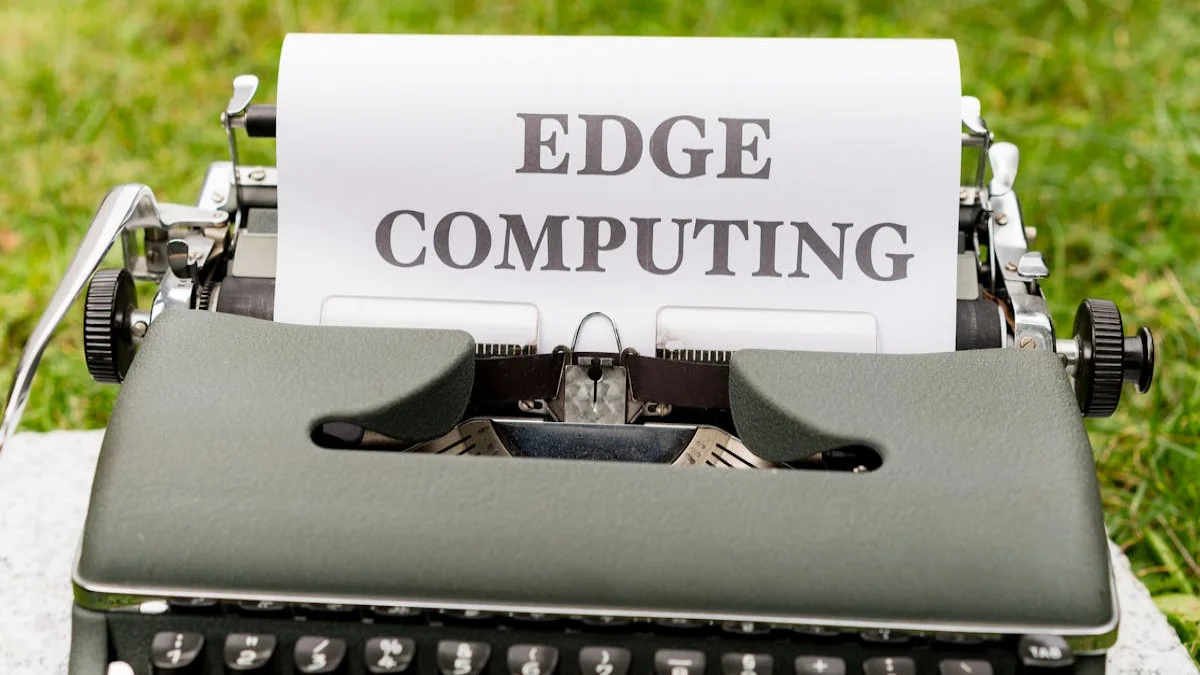
Edge Computing: Europe's Next Big Thing?
Everyone's talking cloud. I say, look elsewhere.
Executive Summary
This investigative report decodes the critical structural vectors and strategic implications of Edge Computing: EU's Next Decade Tech. Our analysis highlights the core pivots defining the next cycle of industry evolution.
Yeah, you heard me. While the silicon titans are busy shouting from their data center rooftops about the wonders of the cloud, I’ve been sniffing around the edges. And what I’ve found, particularly for us here in the EU, is a future already unfolding. The next decade? It belongs to the edge. You might be thinking, 'Edge computing? Isn't that just for self-driving cars and smart factories?' Sure, those are big pieces of the puzzle, but honestly, that's like saying a ship’s engine is just for making the boat go faster. It misses the whole damn point of maritime travel. (Ref: forbes.com)
1. Latency? What Latency?
This is the obvious one, isn't it? But so many people still just shrug. We're talking about shaving off milliseconds. Milliseconds that can mean the difference between a perfectly orchestrated ballet of robots on a factory floor and a costly, chaotic pile-up. Think about remote surgery, real-time fraud detection, or even just a lag-free gaming experience. Cloud’s too far away. Edge is right there, your digital next-door neighbor, not some distant relative you only see at Christmas.
2. Data Sovereignty Dreams
Ah, Europe. Our glorious, privacy-obsessed continent. GDPR, Schrems II, the whole nine yards. Sending sensitive data zipping across borders to a nebulous cloud server? That’s a regulatory minefield just waiting to explode. Edge computing lets you keep that data where it belongs – close to home, under your watchful eye, compliant with every single EU directive. It’s the digital equivalent of keeping your valuables in your own vault, not a public locker.
3. Bandwidth Bills That Don't Bleed You Dry
Imagine trying to push the entire output of a thousand IoT sensors through a straw every single second. That's what a pure cloud model can feel like. The sheer volume of data generated by connected devices is staggering. Processing it all remotely is a bandwidth hog, and bandwidth costs money. Lots of money. Edge allows you to pre-process, filter, and aggregate data locally, sending only the critical bits upstream. Your internet bill will thank you.
4. Resilience is Your New Superpower
What happens when the internet goes down? If your entire operation hinges on a cloud connection, you’re toast. A broken toaster. Edge nodes, however, can often operate autonomously or with minimal connectivity. This means your critical systems keep humming along even when the wider network takes a siesta. For industries where downtime is catastrophic, this isn't a feature; it's a lifeline.
5. Smarter Devices, Happier Consumers
Think of your smart home devices. Right now, many are a bit… dumb. They rely on the cloud for basic commands. Edge intelligence means your smart fridge can tell you you’re out of milk *before* you even open the door, without asking permission from a server farm in Ireland. It means faster responses, more personalized experiences, and devices that feel truly intelligent, not just connected.
Recommended Reading
6. Green Credentials Matter (Even to Corporations)
Data centers guzzle energy like nobody’s business. The carbon footprint is enormous. By distributing processing closer to the source, edge computing can significantly reduce the need for constant long-distance data transmission and the colossal energy demands of massive, centralized data centers. It's a step, albeit a small one, towards a more sustainable digital future, something the EU is increasingly pushing for.
7. Opening Doors to Innovation
When you remove the shackles of latency and bandwidth constraints, new possibilities emerge. We're talking about truly immersive AR/VR experiences, advanced Editorial at the point of interaction, and the kind of granular, real-time analytics that were previously the stuff of science fiction. The edge is the fertile ground where the next generation of digital services will sprout.
8. Cost-Effectiveness Over Time
While initial setup might seem daunting, look at the long game. Reduced bandwidth costs, minimized downtime, and the ability to scale processing power more granularly often make edge solutions more cost-effective in the long run. You're not renting a giant warehouse when you only need a small shop. You're building out your infrastructure smartly.
9. Enabling the Real-Time Economy
The future isn't about batch processing. It’s about immediacy. From financial trading to logistics management, businesses are demanding real-time insights and decision-making. Edge computing is the bedrock upon which this real-time economy will be built. It's the nervous system, not just the brain.
10. European Industrial Strength
Europe has always been a powerhouse in manufacturing, automotive, and other industrial sectors. These sectors are increasingly digitized. Edge computing is not just a trend; it's a critical enabler for these industries to maintain and grow their competitive edge globally. It's about keeping our industrial might humming, locally and efficiently.
“People are so focused on the shiny, centralized beacon of the cloud, they’re tripping over the gold coins lying at their feet on the edge. The real intelligence isn't always in the vast ocean; sometimes it's in the clever design of the fishing net.” Dr. Anya Sharma, Director of Distributed Intelligence at Obsidian Labs
Frequently Asked Questions
- Will Edge Computing replace Cloud Computing? No, not entirely. Think of it as a symbiotic relationship. Cloud will still handle massive data storage, long-term analytics, and overarching control, while edge handles the immediate, local processing and decision-making. They complement each other.
- Is Edge Computing only for large enterprises? Absolutely not. While large industries benefit immensely, small businesses can leverage edge for localized data processing, improved customer service, and enhanced security. The scale is adaptable.
- What are the biggest challenges to adopting Edge Computing in the EU? Besides the initial investment, the primary hurdles are often skill gaps in managing distributed systems, ensuring robust security across numerous edge nodes, and establishing clear governance frameworks.