
Robots Will Save Us All. Or Will They?
The robots are coming. They promised riches. They lied.
Executive Summary
This investigative report decodes the critical structural vectors and strategic implications of Robots: Scalability Savior or Expensive Illusion?. Our analysis highlights the core pivots defining the next cycle of industry evolution.
Look, I’ve spent enough time squinting at spreadsheets and wading through corporate doublespeak to know a snake oil salesman when I see one. And right now, the snake oil of choice is “robotics for scalability.” Everyone’s hawking it, from the tech bros in their Silicon Valley bunkers to the suit-and-tie crowd who wouldn’t know a circuit board from a circuit breaker. They’re all chirping about how these metal marvels are the golden ticket, the panacea that will magically boost output, slash costs, and save us all a mountain of dough. Frankly, it’s nauseating. And I’m here to tell you why they’re full of it, at least for most of you.
The Myth of the Effortless Scale
Let’s cut through the glitz. The promise is simple: slap a few automated arms into your factory, plug in some fancy Editorial, and *poof*! Instant, unstoppable growth. Your profit margins balloon, your production lines hum with tireless efficiency, and you, my friend, become a titan of industry. It sounds like a fairy tale, doesn't it? But fairy tales are for bedtime, not for boardroom strategies. The reality is far messier. You see, scaling isn’t just about churning out more widgets; it’s about managing the entire ecosystem that creates those widgets. And that’s where the shiny robots often become more of a shiny burden than a savior.
When Robots Become the New Bottleneck
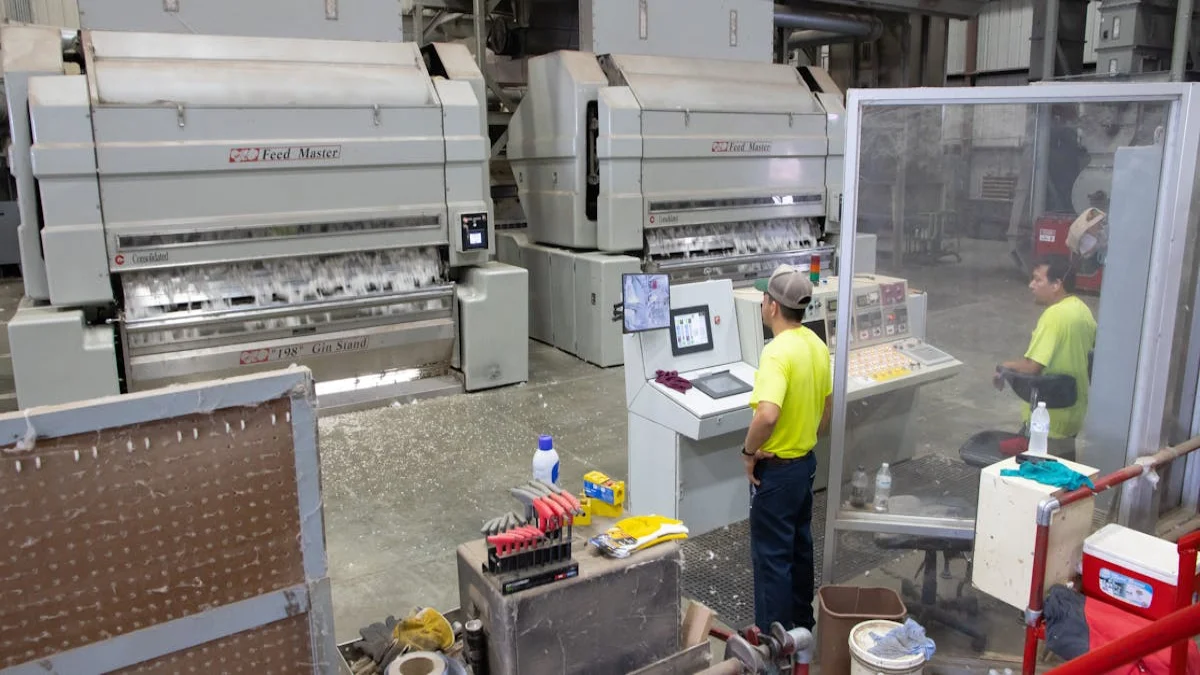
Think about it. You invest millions into a fleet of sophisticated robots. They’re supposed to be faster, more precise, and way cheaper than human labor in the long run. Great. But then what happens when one of those multimillion-dollar behemoths decides to take a nap? Or when the software glitch that nobody anticipated rears its ugly head, halting production across an entire line? Suddenly, your supposed solution is the problem. Your human workforce, the one you might have downsized in anticipation of robotic bliss, is now scrambling to fix a mechanical beast they don't fully understand. It's like upgrading from a reliable old truck to a temperamental supercar that needs a specialized mechanic on speed dial, costing you more in downtime and specialist fees than the original truck ever did.
My colleague, Dr. Anya Sharma, the Director of Chaos at Obsidian Labs, puts it best. “We’re so obsessed with the *automation* part that we forget the *actual work* part. Robots are tools. Brilliant, complex tools, sure, but still tools. You wouldn’t blame a hammer for a poorly built shed, would you? The real challenge isn’t the tool; it’s the carpenter, the blueprint, and whether the foundation is even sound.” And that, my friends, is the inconvenient truth that most of the self-proclaimed robotics gurus conveniently gloss over. (Ref: bloomberg.com)
The True Cost of Robotic Integration
Let’s not even get started on the upfront investment. We’re talking about figures that would make your eyes water. And that’s just the purchase price. Then comes the installation, the calibration, the training of specialized technicians – who, by the way, are not cheap – and the ongoing maintenance contracts that are designed to extract every last cent from your pockets. Forget about saving millions initially; you’re more likely to hemorrhage them trying to get the damn things to work as advertised. And what about the integration with your existing systems? It’s rarely a plug-and-play scenario. More often than not, it requires a complete overhaul of your IT infrastructure, another massive expense and a breeding ground for unforeseen complications that can derail your entire scaling strategy faster than a poorly timed software update. (Ref: wikipedia.org)
Recommended Reading
Where Robotics *Can* Shine (If You're Smart)
Now, don’t get me wrong. I’m not saying robotics is a complete write-off. For certain specific, highly repetitive, and dangerous tasks? Absolutely. Think welding in extreme heat, picking up and moving heavy, uniform objects on a predictable schedule, or performing precision assembly in sterile environments. In these niche applications, where the variables are minimal and the benefit of removing human error or risk is undeniable, robots can indeed be a powerful asset. They can enhance throughput, reduce injury claims, and offer a level of consistency that humans, bless their inconsistent hearts, simply cannot match over prolonged periods. But this isn’t about a wholesale flip of your entire operation. This is about targeted deployment where the ROI is crystal clear, not a blind leap of faith into the automated unknown.
The companies truly benefiting are those that understand this nuanced approach. They’re not replacing their entire workforce with automatons. They’re identifying specific pain points, automating those, and then leveraging the freed-up human capital for tasks that require creativity, critical thinking, and complex problem-solving – things robots, at least for the foreseeable future, are laughably bad at. They’re using robotics to augment their human teams, not to eliminate them. This is the subtle, but crucial, distinction that separates the success stories from the cautionary tales.
So, before you get swept up in the hype and start drafting purchase orders for an army of metal workers, take a step back. Ask yourself if this is truly a solution to your scalability problem, or just another shiny, expensive distraction. Are you solving a real business challenge, or are you just trying to keep up with the Joneses of automation? Because the cheapest, most scalable solution often lies not in more machines, but in smarter processes and a better-equipped, more motivated human workforce. And that, my friends, is a truth that no amount of robotic arm-waving can obscure.
“The allure of a fully automated utopia is potent. But often, the greatest cost savings aren’t found in replacing people, but in empowering them with the right tools and a clear, intelligent operational strategy.”
Frequently Asked Questions
- Can robotics truly save businesses millions?
- For very specific, high-volume, repetitive, or hazardous tasks, yes. However, for most businesses, the upfront costs, integration challenges, and ongoing maintenance can negate initial savings, especially if not implemented strategically.
- What are the biggest risks of implementing robotics for scalability?
- The primary risks include exorbitant upfront investment, significant downtime due to technical failures or integration issues, the need for highly specialized and expensive maintenance personnel, and the potential for a mismatch between robotic capabilities and actual operational needs, leading to inefficient or ineffective automation.
- How can businesses ensure robotics is a wise investment for scaling?
- Businesses should focus on highly targeted applications where the benefits are clearly quantifiable and the risks are manageable. Prioritize tasks that are dangerous, monotonous, or require extreme precision. Ensure robust integration planning and invest in training for human oversight and maintenance, rather than viewing robots solely as replacements for human labor.